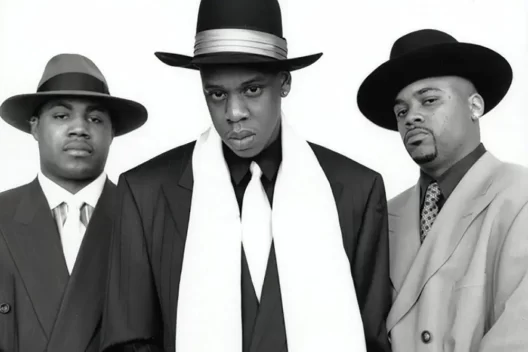
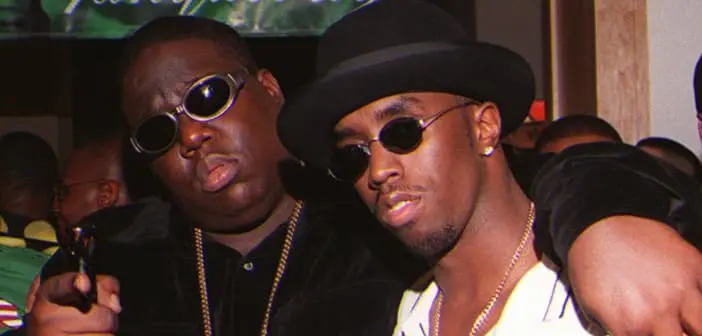
If the West Coast built its rap empires on gang culture and the raw realities of the streets, the East Coast counter-movement was built in corporate boardrooms. Sean “Puffy” Combs did not want to be just a street legend; he wanted to be an executive.
The story of Bad Boy Records is a masterclass in aggressive marketing, industrialized music production, and highly predatory legal maneuvering. It was the blueprint for the corporate hip-hop era.
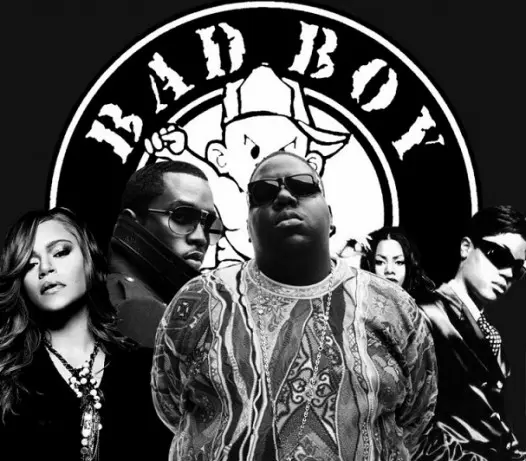
The $1.5 Million Joint Venture
To understand the financial architecture of the label, you first have to ask: who owns Bad Boy Records? Unlike many independent startups that bootstrapped their way up, Bad Boy was launched with corporate backing from day one.
After being fired from Uptown Records by Andre Harrell, Combs secured a meeting with Clive Davis, the legendary executive at Arista Records. Davis saw the vision and wrote a check for $1.5 million to establish a 50/50 Joint Venture. This was an incredibly rare deal structure at the time; it meant Bad Boy Entertainment was not just a subsidiary, but an equal partner sharing the profits and the risks with the corporate giant BMG (Arista’s parent company).
Later, Combs would renegotiate this deal, securing a $10 million payout while remarkably maintaining his 50% ownership, and eventually securing a staggering $50 million advance based strictly on future expectations.
“Flava In Ya Ear”: The Minimum Viable Product
Before Arista would let Puffy unleash his ultimate asset—The Notorious B.I.G.—he needed a “Proof of Concept.” He needed to prove his marketing strategy worked. That Minimum Viable Product (MVP) was Craig Mack.
The release of Craig Mack’s “Flava In Ya Ear” was a calculated business move that shattered expectations. The track exploded, selling over 1 million copies and earning a Platinum certification. Forensically speaking, its chart performance was a dual victory: it spent a then-record 14 weeks at No. 1 on the Billboard Hot Rap Songs chart, absolutely dominating the core hip-hop demographic, while simultaneously breaking into the mainstream by peaking at number 9 on the overall Billboard Hot 100.
More importantly, Combs used the track to invent Posse Cut Marketing. He created the “Flava in Ya Ear (Remix)” featuring LL Cool J, Busta Rhymes, and a young Notorious B.I.G. This strategy allowed him to launch multiple artists and hijack the industry’s attention using the marketing budget of a single music video.
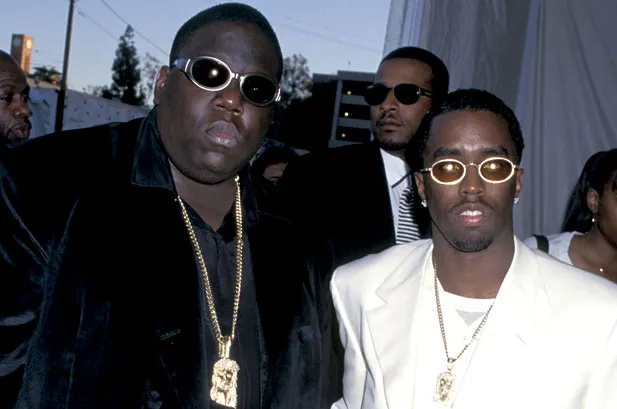
Industrialized Sampling & “The Hitmen”
To dominate the radio, Bad Boy could not rely on raw, underground beats. Combs shifted the entire industry into the “Shiny Suit Era” by creating an in-house production team known as The Hitmen (featuring producers like Chucky Thompson, Easy Mo Bee, and Nashiem Myrick).
The Bad Boy Records’ artists were supplied with a relentless assembly line of guaranteed hits through Industrialized Sampling. Instead of digging for obscure breaks, The Hitmen sampled massive 1980s Pop and R&B classics (from Diana Ross to David Bowie). The ultimate example was sampling The Police’s “Every Breath You Take” for “I’ll Be Missing You,” which went on to sell 9 million copies. This forensic formula forced mainstream, non-hip-hop radio stations to play their records because the melodies were already deeply embedded in pop culture.
The Dark Side of the Ledger: Recoupments & Predatory Practices
Behind the champagne and the shiny suits lay a labyrinth of aggressive contracts. While the Wu-Tang Clan was pioneering the Freedom of Movement clause, Bad Boy was operating a highly restrictive, corporate machine.
The Illusion of the Advance (Recoupment & Masters)
To the public, artists signing to Bad Boy were instantly rich. In reality, they were trapped by the mechanism of Recoupment. When an artist received an advance, they did not realize it was a high-interest loan. The label recouped everything—the cost of the music videos, the studio time, the promotional tours, and even their living expenses—directly from the artist’s royalty share before the artist ever saw a royalty check. Furthermore, the label strictly controlled the Publishing Rights and the master recordings.
The “Fake Lawyers” Tactic
How did Combs convince young, hungry artists to sign over 50% of their publishing rights? Through a brilliant, albeit predatory, legal tactic. When presenting a contract, Diddy would suggest the artist use lawyers “recommended” by the label. In practice, these artists were being represented by attorneys whose primary interest was protecting the Bad Boy corporate umbrella, echoing the same tactics used by Jerry Heller.
The Lox Case Study & Credit Appropriation
The most glaring example of this control was the group The Lox. In a practice of extreme credit appropriation, Combs would take the best demo tracks created by his artists—such as the massive hit “All About The Benjamins”—and insert his own name as the primary artist, relegating the actual writers and performers to “featuring” status on their own songs.
The Lox found themselves legally trapped in an oppressive 6-album deal. To escape, they had to launch a massive, public “Free The Lox” media campaign, proving that behind the polished corporate image, Bad Boy was an iron-fisted monopoly.
The Bad Boy Economy: Peak Valuation
Despite the internal legal wars and the tragic violence that culminated around the time of the 1995 Source Awards, the financial returns were undeniable.
So, how much is Bad Boy Records worth? Before Combs even secured the $50 million advance from Clive Davis, the label’s aggressive strategy of radio domination, cross-promotion, and ruthless recoups led to a peak valuation where Bad Boy generated an astonishing $130 million in a single year.
The Bad Boy business model proved that by combining corporate joint ventures, familiar pop samples, and iron-clad predatory contracts, a hip-hop label could operate with the efficiency—and the ruthlessness—of a Wall Street firm.