
Introduction: The Myth of the Sole CEO
The loudest voice in the room often writes history. For over three decades, the imposing figure of Marion “Suge” Knight has dominated the story of Death Row Records. The narrative was simple: a former bodyguard muscled his way into the music industry and built an empire.
But that is not the whole truth.
While Suge Knight was the face of the operation, the financial engine that powered the most dangerous record label in history remained hidden behind prison walls. The true architect was a man named Michael “Harry-O” Harris.
Without Michael Harry O Harris, there would be no The Chronic, no Snoop Dogg, and no Death Row empire. This is the documented story of the man who put up the money, the lawyer who brokered the deal, and the betrayal that erased a founder from history.
The 1.5 Million Dollar Question: Who Funded Death Row Records?
If you type “Death Row Records founder” into a search engine, you often see Dr. Dre and Suge Knight. But in the world of high-stakes business, the real founder is the one who signs the checks.
The $1.5 Million Investment
The definitive answer to who funded Death Row Records is Michael Harris. According to legal documents and Harris’s own confirmations, he provided Suge Knight’s startup capital for Death Row to launch the operation. The specific figure was $1.5 million. However, contrary to the belief that this money was strictly for studio time, Harris clarified its true purpose. Harris earmarked the capital for “whatever had to take place to keep everybody secure.”
- Lifestyle & Maintenance: The money covered room and board for the artists who were defecting from other labels.
- Legal Defense: Specifically, the label reserved a massive portion of the budget for fighting criminal case and lawsuits, which were frequent in the Ruthless vs. Death Row transition.
The Silent Partner: Patrick Johnson
Interestingly, investigative reports from The Los Angeles Times suggested that a significant part of that initial $1.5 million actually came from another imprisoned figure named Patrick Johnson. While Michael Harris later confirmed this connection, he noted that Johnson “didn’t want me to talk to him,” hinting at an unresolved financial dispute between the two incarcerated financiers. Regardless of the source’s origin, the funnel was undeniably Harry-O.
Visual Proof: The Suzuki Samurai vs. The Mercedes 500
Nothing illustrates the impact of Harris’s funding better than the sudden upgrade in Suge Knight’s lifestyle. Before the deal with Harry-O was finalized, Suge Knight was driving a humble Suzuki Samurai. He was a bodyguard with ambition but limited liquid cash. Once the partnership with Godfather Entertainment (Harris’s company) was active:
- Consequently, Suge Knight immediately upgraded to a Mercedes 500 series.
- Furthermore, David Kenner (the attorney) received a new car.
- John Payne, an associate, was given David Kenner’s old car (a Lexus LS).
As John Payne recalled in interviews: “Mike thought everybody should look good.” The money from prison didn’t just buy equipment; it bought the image of power that Death Row needed to intimidate its rivals.
The Front: The Role of Godfather Entertainment
To operate a business from a prison cell, Michael Harris needed a legitimate corporate vehicle. That vehicle was Godfather Entertainment.
The Corporate Structure Godfather Entertainment was Michael Harris’s parent company. The plan was sophisticated: Godfather Entertainment would be the multimedia umbrella covering:
- Death Row Records (Music)
- A movie production unit
- Pay-per-view concerts
The initial agreement was that Godfather Entertainment was the parent, and Death Row was the subsidiary. This isn’t just hearsay; the physical evidence exists on the early releases. If you look at the back cover of the original Deep Cover soundtrack—the single that introduced Snoop Dogg to the world—the credits tell the true story. It lists Godfather Entertainment explicitly.
Lydia Harris and Suge Knight Since Michael was incarcerated at the time, his wife, Lydia Harris, became the external face of his interests. The dynamic was complex. While Lydia Harris and Suge Knight were technically partners, the power dynamics were skewed from the start. The “Godfather” vision was to have a legitimate front that could clean and organize the street money, turning it into a corporate empire.

The Enforcer: David Kenner Death Row Connection
If Michael Harris was the bank and Suge Knight was the muscle, David Kenner was the bridge. David Kenner wasn’t just a typical entertainment lawyer; he was the glue that held the criminal and corporate worlds together.
The Admission
Kenner’s role was to facilitate communication between Harris in prison and Knight on the streets. In a candid moment captured on tape (which was later confiscated by the FBI), David Kenner himself admitted the hierarchy. Speaking about the launch of the label, Kenner stated:
“The label started with Dr. Dre, who was gonna do his own thing. And it was a lotta help from Suge Knight, and Harry O… Everybody was nodding to a guy named Harry O.”
This quote is the “smoking gun.” It confirms that in the early days, even the feared Suge Knight and the powerful attorney acknowledged who the true boss was. David Kenner Death Row history is often remembered for his defense of Snoop Dogg in his murder trial, but his most critical role was setting up the deal that allowed Harry-O to fund the label from behind bars.
The Betrayal: Chasen’s and Tehachapi
The partnership between Michael Harris and Suge Knight didn’t end with a handshake; it ended with a calculated maneuver that resembles a movie plot.
The Party at Chasen’s
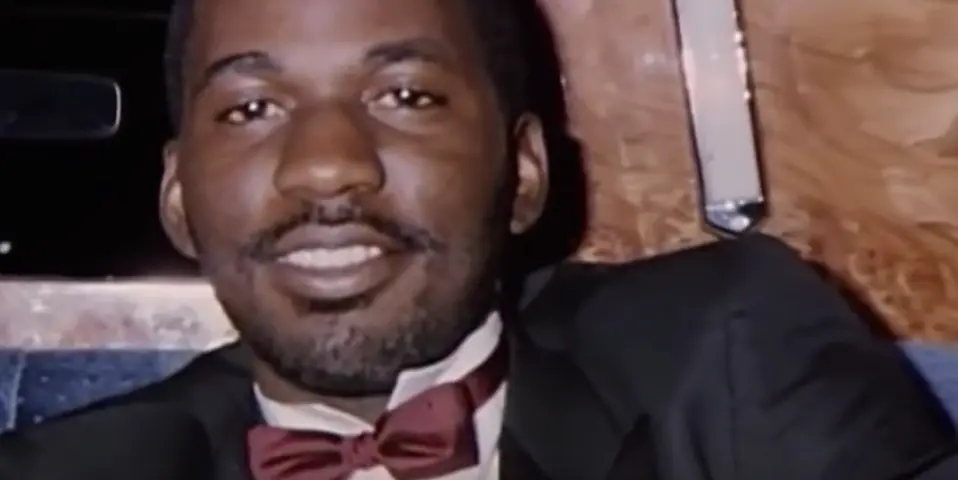
The launch of Death Row Records was celebrated with an extravagant party at the legendary Chasen’s restaurant in Beverly Hills. It was a moment of triumph. Godfather Entertainment paid for the entire event. The champagne was flowing, the press was present, and the industry was taking notice. During the toasts, David Kenner raised a glass to “the man who made it all possible,” referencing Harry-O. To the outside world, it looked like a happy marriage of capital and talent.
The Move to Tehachapi State Penitentiary
However, while the toasts were being made at Chasen’s, a darker plan was being executed. On the very same day of the party, Michael Harris was abruptly transferred to Tehachapi State Penitentiary. This was not a coincidence.
- The Isolation: Tehachapi was known for its strict communication policies. Upon arrival, Harris was subject to a “60-day phone restriction.”
- The Takeover: For two months, the financier was completely cut off from the outside world. He couldn’t call Lydia, he couldn’t call Kenner, and he couldn’t check on his investment.
By the time Michael Harris regained phone privileges, the locks had been changed, metaphorically speaking. The narrative had shifted. Death Row was now Suge Knight’s label. The “Godfather Entertainment” credits began to disappear from future releases. The man who bought the Mercedes 500s and funded the legal defense teams was erased from the company he built.
The Legal Aftermath: Lydia Harris Suge Knight Lawsuit
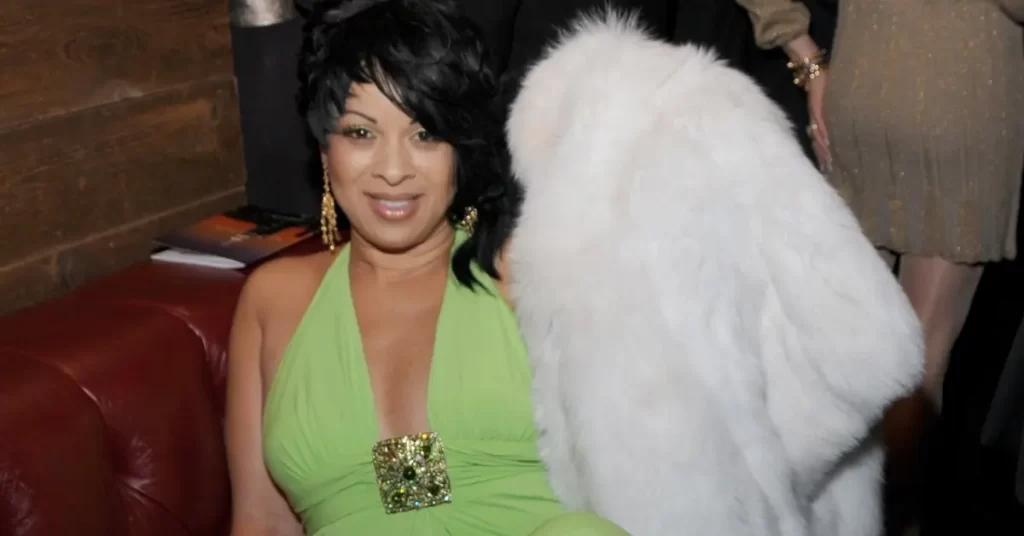
The betrayal at Tehachapi sparked a legal war that lasted longer than the label’s musical dominance. Michael Harris didn’t stay silent. Through his wife, he launched a massive lawsuit against Suge Knight and Death Row Records, claiming his 50% stake in the company.
The Lydia Harris Suge Knight legal battle became the final nail in the coffin for the original Death Row era. In 2005, a judge awarded Lydia Harris a massive $107 million judgment. This judgment is what forced Death Row Records into bankruptcy, eventually leading to the label being sold off to different ownership groups, until it finally landed in the hands of the artist it helped create: Snoop Dogg.
Redemption: The Michael Harris Trump Pardon
The story of Michael Harris has a surprising third act. After spending over 30 years in prison—and watching the empire he funded rise, fall, and change hands—Harris finally received his freedom.
The 2021 Pardon In the final days of his first term, Donald Trump issued a series of pardons, and among them was Michael Harris.. The Michael Harris Trump pardon wasn’t random; it was the result of intense lobbying by none other than Snoop Dogg. In a poetic twist of fate, the artist whose career was launched by Harris’s money (via the Deep Coversoundtrack) was the one who helped secure his freedom decades later.
Conclusion: The Legacy and Net Worth
So, what is the Michael Harry O Harris net worth today? While he lost out on the peak earnings of Death Row’s golden era (the hundreds of millions generated by The Chronic and Doggystyle), Harris has re-emerged as a businessman and philanthropist. His legacy, however, is not measured just in currency. It is measured in history. The $1.5 million he moved from a prison cell didn’t just buy cars for Suge Knight; it bought the infrastructure for the West Coast to dominate the world.
Michael “Harry-O” Harris remains the unsung Godfather. He proved that in the music industry, visibility is power, but funding is reality.
[…] 0January 6, 2026 Diverse Mentality […]
[…] Row solely on his own hustle is incomplete. The financial foundation of the empire was laid by Michael “Harry-O” Harris, an imprisoned drug kingpin seeking to launder legitimate funds into the entertainment […]