Introduction: the end of an Era
John Cena has officially hung up his sneakers. Following his final, grueling battle against Gunther that ended in submission, the tributes are pouring in. The mainstream media is celebrating his record-breaking 17 World Championships, his movies, and his charity work. But they are missing the most important chapter of his story.
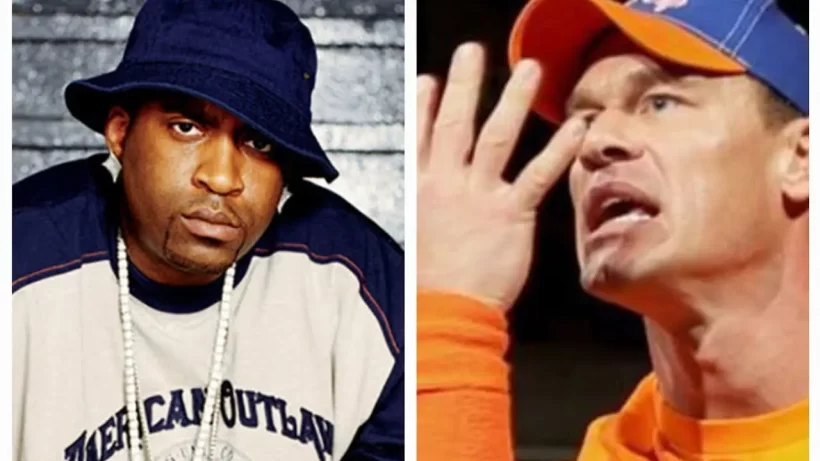
They forget that before he was “Super Cena,” he was the Doctor of Thuganomics. He was the guy rapping his own entrance theme. And most importantly, his signature taunt—the iconic hand wave in front of the face—wasn’t invented in a WWE writer’s room.
It came straight from Queens, New York. It came from G-Unit.
Everyone talks about the records, but few talk about the roots. Cena didn’t become a star by accident; he did it by embracing the culture. His most famous gesture didn’t start in a wrestling ring—it started in a G-Unit video. This is the untold story of how a simple move from Tony Yayo became the most recognized taunt in sports entertainment history.
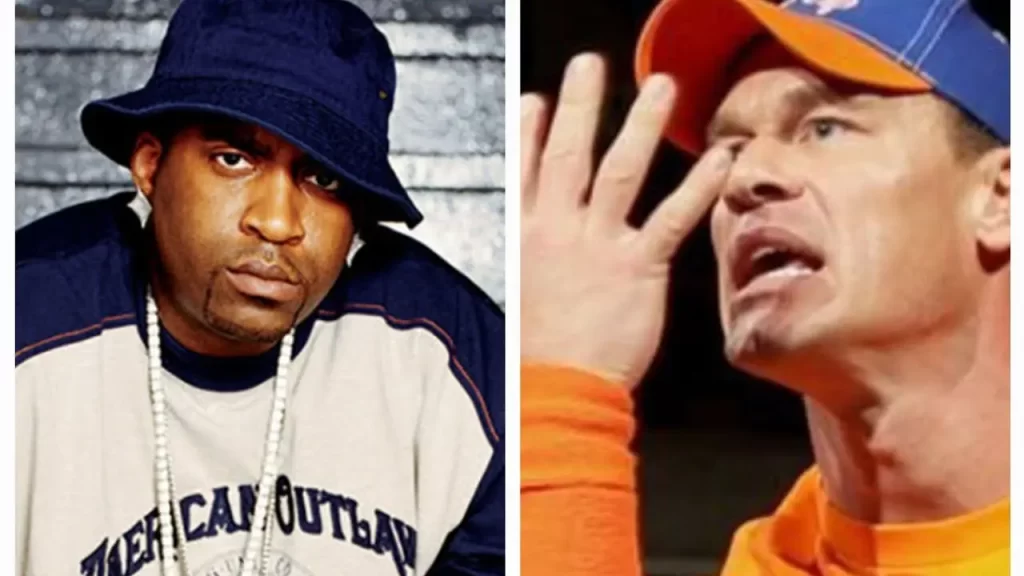
Did Tony Yayo invent “You Can’t See Me”? (The origin story)
In the early 2000s, G-Unit wasn’t just a rap group; they were a cultural movement. The legend of the “You Can’t See Me” move has been debated on forums for years, but the truth is simpler—and doper—than the rumors.
The story goes back to Tony Yayo. In the music video for 50 Cent’s “In Da Club” and other early G-Unit appearances, Yayo had a distinct dance move: he would hold his hand in front of his face, moving his head slightly. It was a way to hide his face, a nod to being camera-shy or “low key” due to his legal troubles at the time.
John Cena, a legitimate Hip Hop head who grew up listening to the golden era of boom-bap, was watching.
The “Dare” That Changed History Cena has confirmed this story himself. Before a match on Velocity (a WWE B-show), his brother dared him to do “the Tony Yayo dance” on national TV. Cena accepted the dare but modified it. Instead of moving his head behind the hand (which looked like he was hiding), he waved his hand in front of his face to make it more visible for the massive arena crowds.
He added the catchphrase “You Can’t See Me”—a classic rap boast meaning “I’m on a level you can’t even perceive”—and a phenomenon was born.
Yayo’s Reaction: respect over lawsuits
In a world where creators often sue over viral dance moves (think the backpack kid dance), Tony Yayo has taken a different route. He has publicly embraced Cena’s homage multiple times, confirming there is zero bad blood.
For Yayo, it wasn’t theft; it was global amplification. John Cena took a gesture from the streets of South Jamaica, Queens, and performed it in front of 80,000 people at WrestleMania.
How John Cena took it global (the Thuganomics Era)
It’s hard to explain to Gen Z just how weird it was to see a white wrestler in 2003 wearing throwback jerseys, rapping battle bars, and getting cheered for it. This was the “Doctor of Thuganomics” era.
Cena didn’t just use the hand gesture; he adopted the aesthetic.
- The Gear: He wore authentic Mitchell & Ness jerseys (referencing Fabolous and the throwback wave).
- The Flow: His entrance theme, “Basic Thuganomics,” was recorded by Cena himself. It captured that gritty, East Coast aggression that fit the ruthless aggression era of WWE.
- The Album: In 2005, he released You Can’t See Me with his cousin Tha Trademarc. The album debuted at #15 on the Billboard 200, trying to prove his lyrical skills just like the pioneers of the Roxanne Wars did in the 80s.
By adopting Yayo’s mannerism and the surrounding culture, Cena became the bridge for a lot of young fans between wrestling and Hip Hop.
The 50 Cent connection
While fans have often speculated about a rivalry or a deep friendship between 50 Cent and John Cena, the connection is rooted primarily in the origin of the “You Can’t See Me” gesture.
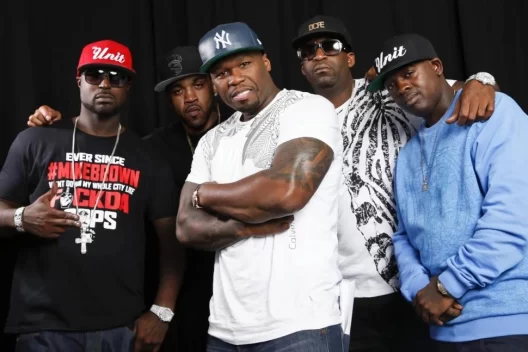
50 Cent has featured in the music video for Tony Yayo’s “So Seductive,” where the move is prominently displayed, cementing the G-Unit stamp on the gesture. Over the years, the internet has fueled a playful “Cena vs. 50 Cent” narrative through memes and video games like WWE 2K, but in reality, 50 Cent never took legal action against Cena for adopting the G-Unit brand’s move.
It remains a unique crossover moment where the top star in Wrestling and the top group in Hip Hop shared a visual language without ever needing to step in a booth—or a ring—together.
John Cena’s Hip Hop legacy (the references)
Cena didn’t just take; he gave back. Throughout his career, he has dropped references or connected with rappers in ways that show he is a true fan.
| Rapper / Group | The Connection | Context |
| Tony Yayo | “You Can’t See Me” | The origin of Cena’s most famous taunt straight from Queens, much like the legendary Juice Crew in the Bridge Wars. |
| M.O.P. | Entrance Theme | Cena’s “My Time is Now” heavily samples the energy and horns of M.O.P.’s “Ante Up.” |
| Wiz Khalifa | WWE 2K15 Soundtrack | Cena and Wiz collaborated on two exclusive tracks (“All Day” and “Breaks”), bridging the gap between WWE and modern rap. |
| Westside Gunn | Music & Fandom | Gunn named a track “Heel Cena” and frequently references wrestling culture. Cena has acknowledged Gunn’s fandom on social media. |
Conclusion: more than just a meme
As John Cena walks away from the ring, internet culture will remember him as a meme. Wrestling fans will remember him as a GOAT. But for us at Diverse Mentality, we remember him as the guy who proved that Hip Hop culture is universal.
He didn’t mock the culture; he embodied it. He took a small piece of Tony Yayo’s swagger and turned it into a global symbol of triumph.
So, when you see Cena wave his hand for the last time, don’t just see a wrestling move. See it for what it really is: a salute to Queens, a nod to G-Unit, and the most successful “sample” in history.