Why talking about women in Hip Hop matters today
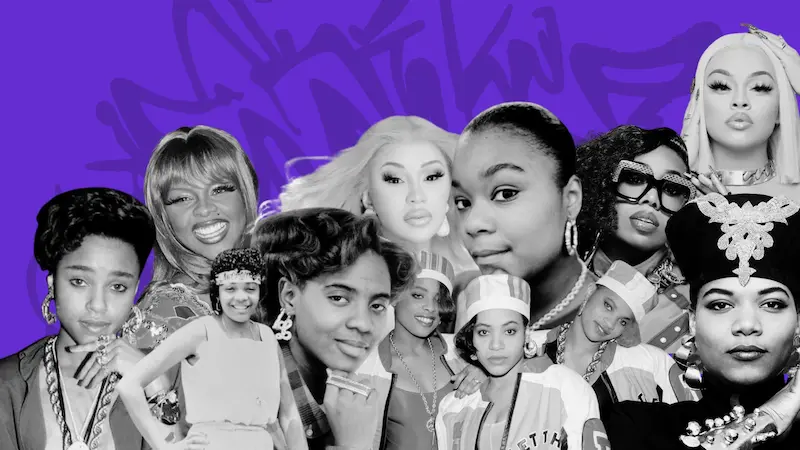
Talking about women in Hip Hop today isn’t just a nostalgic act or a “women’s month” topic—it’s a cultural correction. For 50 years, women have shaped Hip Hop’s sound, aesthetics, politics, and energy.
They’ve been MCs, DJs, producers, label founders, dancers, journalists, organizers, curators, archivists, and innovators. Yet if you open the SERP today and search for “history of women in Hip Hop,” you’ll quickly realize something’s off: the story is fragmented, shallow, and incomplete.
Women were never side characters. In fact, they were there from day one—hosting parties, organizing the first jams, crafting the first hits, pioneering flows, and setting the stage for every era that followed. But traditional media, early rap journalism, and even modern digital coverage often sidelined their contributions. Their stories were minimized, distorted, or simply erased.
The systemic erasure: why the story is incomplete
Why? Because Hip Hop, like the world around it, has long been shaped by male-centered narratives. Women have had to fight through sexism, double standards, and media sensationalism just to claim the space they had already earned.
And yet, despite the lack of recognition, they kept building.
Today, with Hip Hop at its 50-year mark and a new generation of women leading a global renaissance, documenting their contributions isn’t just important—it’s urgent. After all, you can’t understand the modern landscape of rap, TikTok virality, streaming charts, or genre-fluid aesthetics without acknowledging the women who made all of this possible.
The goal of this article is clear: provide a complete, accurate, and culturally honest overview of the history of women in Hip Hop—from the birth of the culture to the explosive renaissance happening right now.
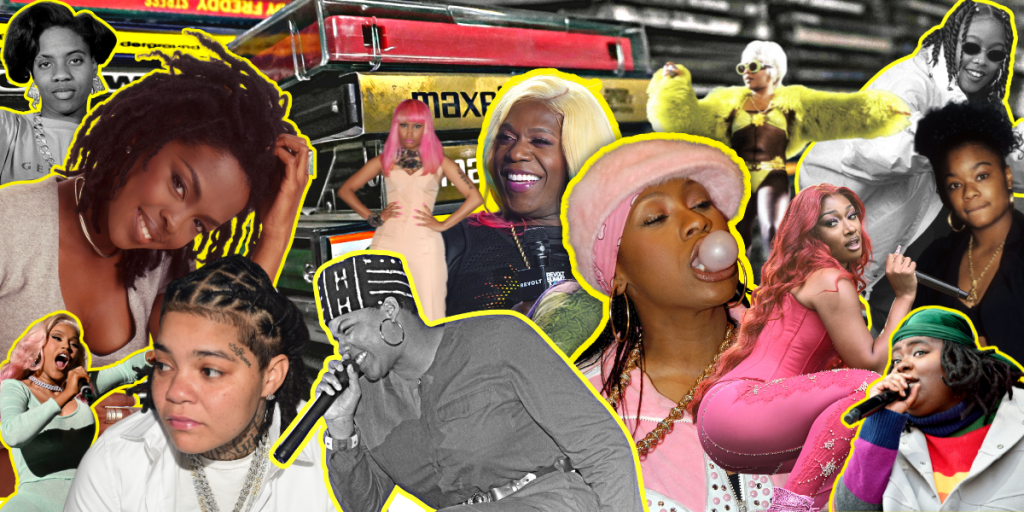
The origins (1973–1985): the first Women of Hip Hop
Before Hip Hop was an industry, a genre, or a global movement, it was a community practice—an ecosystem built on block parties, neighborhood unity, and creative survival. And women were embedded in every layer of that ecosystem. They weren’t “invited later.” They were there from the start.
Hip Hop was born in the Bronx during a time of economic decline, redlining, abandoned buildings, and social neglect. However, the culture thrived because people—especially women—held their communities together. They organized events, protected spaces, funded parties, and supported early DJs and MCs in ways history books rarely credit.
Bronx Block Parties and the birth of a movement
The early block parties weren’t glamorous. They were DIY gatherings where neighbors dragged out extension cords, set up makeshift sound systems, spread the word by hand, and transformed chaos into culture. Women were frequently the backbone of these events: promoting, hosting, coordinating, cooking, securing the space, and ensuring the community felt safe enough to show up and dance.
These parties weren’t “just entertainment.”
They were acts of resistance, healing, and rebirth. They were the birthplace of the culture—and women were essential to that birth.
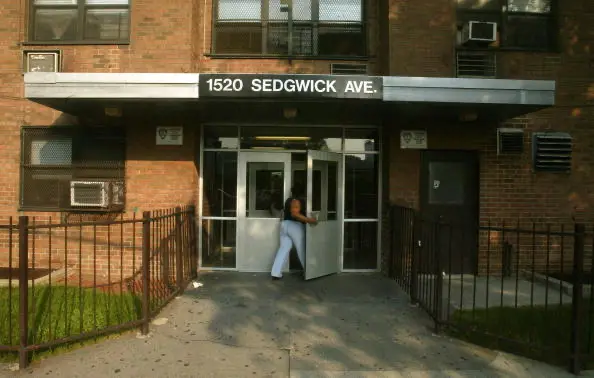
MC Sha-Rock: the first female MC
MC Sha-Rock, from Funky 4 + 1, isn’t just “a female rapper.” She is the first female MC in Hip Hop history—and one of the earliest MCs to transform live performance into a coordinated, communal, high-energy art form.
Her breath control, delivery, and ability to command a crowd influenced both her male and female peers. Sha-Rock’s stage presence challenged gender norms and made one thing clear:
Women not only belonged on stage—they could dominate it.
Although today, many artists cite her as a blueprint, yet she remains under-told in mainstream narratives. This article corrects that.
Cindy Campbell: the woman behind the first Hip Hop party
Every origin story needs a visionary—and Cindy Campbell was exactly that.
She organized the very first party where DJ Kool Herc played the breaks that would eventually define Hip Hop. She handled the promotion, rented the space, coordinated the logistics, and made sure the event happened.
Ultimately, without Cindy Campbell, that historic night doesn’t happen. Without that night, the birth of Hip Hop looks completely different.
And yet, in many histories, her name barely appears.
This is part of the problem we’re correcting here.
Sylvia Robinson: the mother of Hip Hop
If Hip Hop had an industry “mother,” it would be Sylvia Robinson.
Co-founder of Sugar Hill Records, she:
- produced Rapper’s Delight
- signed early rap acts
- pushed Hip Hop onto mainstream radio
- turned local culture into a commercial force
At a time when almost no women held executive positions in music—let alone Black women—Sylvia Robinson built the first major rap label and helped transform Hip Hop into a global industry.
Furthermore, her business acumen, production instincts, and cultural foresight paved the way for every rap deal that came after.
Early Barriers and the erasure of women
Despite their role in shaping the culture, women faced—and still face—unique forms of erasure. In the early years, they had to navigate:
- sexism inside crews
- gatekeeping from DJs and promoters
- media narratives minimizing their contributions
- industry resistance to funding female acts
- double standards around image and behavior
- lack of radio support
- exclusion from documentaries, books, and archives
The erasure wasn’t accidental—it was systemic.
And yet, despite all this, women continued to innovate, nurture, and evolve Hip Hop from the inside.
The Golden Age (1985–1995): pioneers, power, and cultural transformation
If the early years established Hip Hop as a community-driven movement, the Golden Age proved it could be a global cultural force. Women were not only participants—they were central architects. This era is where female MCs began shaping the lyrical landscape, challenging misogyny, and forging new artistic identities that blended politics, feminism, and street ethics. And unlike the mainstream narrative suggests, women didn’t just “join later.”
They were front and center during Hip Hop’s most innovative decade.
Queen Latifah: a blueprint of black feminist power
Queen Latifah wasn’t just an MC; she was a cultural force. With her Afrocentric style, unapologetic self-love, and commanding delivery, she pushed messages of empowerment into the mainstream.
Her anthem “Ladies First” became one of the earliest mainstream declarations of Black womanhood as powerful and self-defined.
Latifah was doing something revolutionary:
She wasn’t asking for space—she was taking it, reshaping what rap could talk about, and who it could uplift.
Her presence in Native Tongues also linked her to a lineage of jazz-rap innovators like De La Soul and A Tribe Called Quest, embedding her work within the most creative artistic movements of that era.
MC Lyte : technique, precision, legacy
MC Lyte’s pen was razor-sharp. She brought:
- multisyllabic rhyme schemes
- gritty storytelling
- clean, intentional delivery
- a technically advanced flow years ahead of many peers.
Her classic track “Lyte as a Rock” remains a masterclass in cadence and breath control. Unlike many who rose through controversy or trend-chasing, Lyte built her career on pure skill.
She made it unmistakably clear: essentially, women weren’t just as good as men—they were pushing the bar higher.
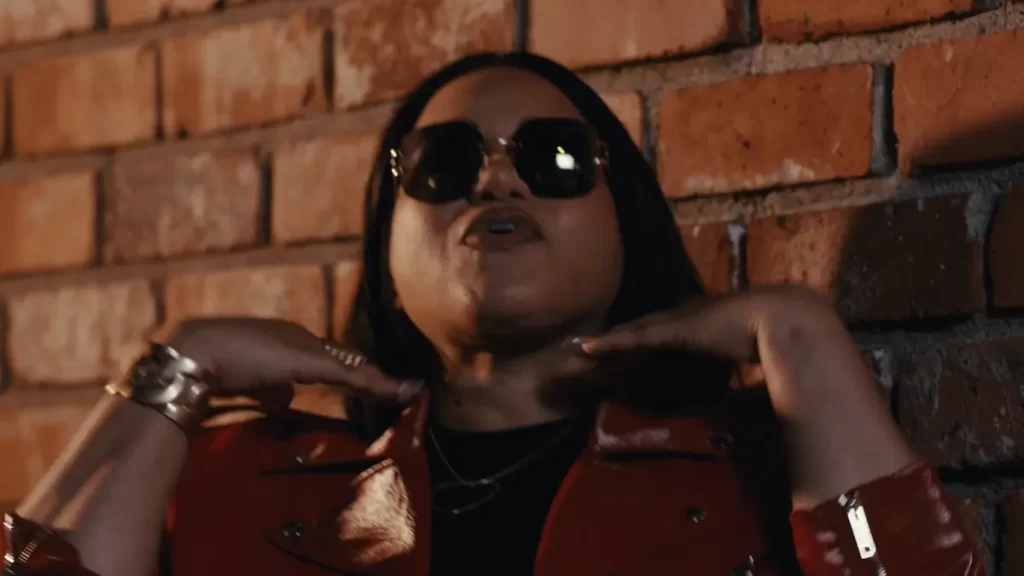
Monie Love: transatlantic innovation
Monie Love added a London twist to New York’s Native Tongues movement. Her rapid-fire flow, accent, and Afrocentric messaging made her an essential bridge between UK and US Hip Hop.
“Monie in the Middle” stands as one of the earliest Hip Hop tracks explicitly addressing sexism and relationship dynamics from a woman’s perspective—without sacrificing groove or technicality.
Salt-N-Pepa: the first female Hip Hop superstars
Before social media, before crossover marketing, before “female empowerment” became a brand strategy, Salt-N-Pepa were already global celebrities. With hits like “Push It” and “Shoop,” they:
- normalized women talking openly about sex
- challenged restrictive double standards
- demonstrated massive commercial viability
- brought choreographed performances to mainstream rap
They didn’t enter the male-dominated system quietly: they redefined it.
Roxanne Shanté and the Roxanne Wars
Roxanne Shanté was only 14 when she became the center of the Roxanne Wars, one of the most explosive battle rap moments in history.
Her freestyle ability was unmatched, and her presence forced an entire generation of male MCs to upgrade their bars.
Her influence remains foundational for battle rap, diss culture, and lyrical sparring.
Themes that defined the Golden Age for women
During this era, women in Hip Hop pushed boundaries in every direction:
- Sexism in Hip Hop → they confronted it directly in lyrics
- Female representation → women controlled their narratives
- Black feminist ideals → empowerment, identity, community
- Activism → many tracks were political, educational, or socially conscious
- Aesthetic innovation → fashion, visuals, and branding began evolving through them
This is the decade where women reshaped the conversation—not just about gender, but about what Hip Hop could be.
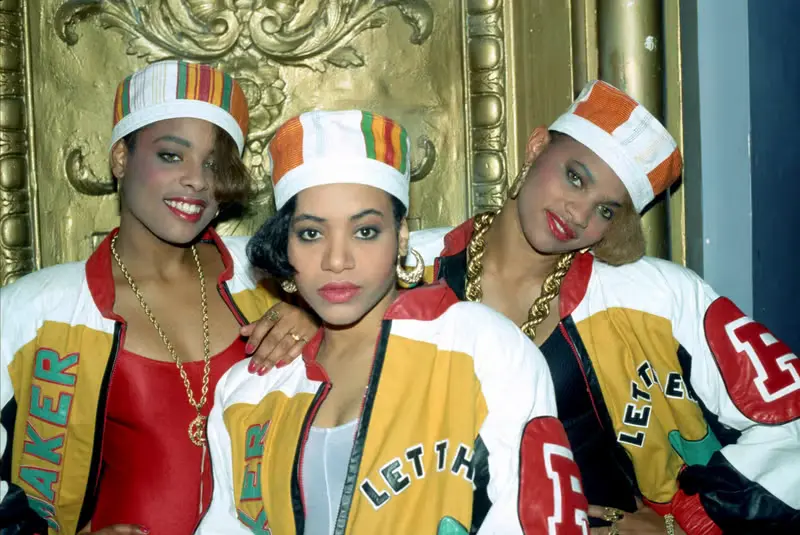
1995–2005: mainstream dominance and cultural reinvention
If the Golden Age showcased lyrical excellence and political power, the late ’90s and early 2000s marked the moment when women took over the mainstream.
This was the MTV era, the award-show era, the era where rap
became a global business—and women were dominating on all visual, commercial, and creative fronts.
Lauryn Hill: a once-in-a-generation artist
Lauryn Hill’s impact is incomparable.
The Miseducation of Lauryn Hill wasn’t just a successful album—it was a cultural shift.
Lauryn brought:
- vulnerability
- vocal brilliance
- lyrical depth
- Afrocentric spirituality
- social reflection
- genre fusion (rap + soul + reggae + R&B)
Her writing touched everything: motherhood, identity, heartbreak, racism, diaspora, community.
Hip Hop had never seen anything like her before—and arguably hasn’t since.
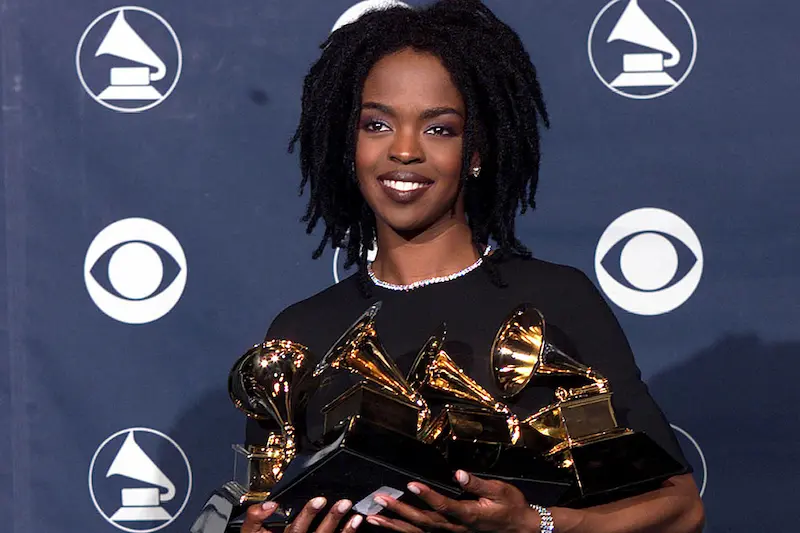
Her Grammy wins made her the first woman to win Best Rap Album and set a precedent for female artistic achievement at the highest level.
Lil’ Kim: sexual agency meets media double standards
Lil’ Kim flipped the industry on its head.
Instead of conforming to expectations of female modesty, she used sexual imagery as a weapon—owning her body, her desire, and her power in ways that unsettled male critics.
But as she broke barriers, she simultaneously exposed the double standards deeply embedded in Hip Hop:
- Men were praised for explicit content
- Women were shamed for the same choices
- Media coverage hypersexualized her instead of analyzing her artistry
Yet Kim’s technical delivery, iconic fashion, and boundary-pushing visuals influenced an entire generation, including Nicki Minaj, Cardi B, and Megan Thee Stallion.
Read our article about Nicki Minaj and Cardi B feud.
Foxy Brown: raw flow and iconic swagger
If Kim embodied hyper-glam sexual agency, Foxy Brown embodied street elegance and lyrical grit.
Her tone, flow, and cadence made her one of the defining voices of late ’90s New York.
She represented:
- Caribbean diasporic influence
- fashion-forward lyricism
- aggressive confidence
- cinematic storytelling
Her albums helped shape the aesthetics of the “mafioso rap” era.
Missy Elliott: the visionary innovator
Missy Elliott revolutionized everything she touched:
- music videos
- production techniques
- songwriting structures
- genre-bending experimentation
- visual creativity far ahead of her time
She wasn’t just a rapper—she was an architect of sound and imagery.
With Timbaland, she crafted futuristic, syncopated beats that influenced modern rap, pop, R&B, and even electronic music.
Missy made being weird, experimental, and visually bold not only acceptable—but iconic.
South, West, East: three cultures, three Hip Hop identities
One of the biggest gaps in the SERP is the lack of a true geographic breakdown of women in Hip Hop. Yet the regional differences between the East Coast, West Coast, and the South have shaped everything—flows, aesthetics, themes, even the rapport women built with their audiences.
Women didn’t just participate in these regional scenes; they built signature sounds inside them.
West Coast: the G-Funk queens and the street poets
The West Coast brought a unique balance of aggression, smoothness, and funk-driven melodies—and women were instrumental in crafting that identity.
The Lady of Rage
Known for her explosive delivery and razor-sharp tone, Lady of Rage stood out on Death Row Records—a label dominated by giants like Dr. Dre, Snoop Dogg, and Tupac.
Her verse on “Afro Puffs” remains one of the most iconic displays of female power in West Coast rap history.
She brought:
- chest-heavy projection
- punchline density
- G-funk attitude
- raw street poetry
J.J. Fad
With their hit “Supersonic,” J.J. Fad became one of the earliest female rap groups to achieve mainstream success. Signed to Ruthless Records, they consequently helped finance future N.W.A projects through their commercial performance.
Their legacy?
They expanded what “West Coast rap” could sound like—introducing electro, speed-rap, and dance elements that would influence multiple eras.
Yo-Yo
A protégé of Ice Cube, Yo-Yo balanced socially-conscious lyricism with hardcore street influence. She rapped about female autonomy, community uplift, and survival. Her style bridged attitude with intellect, and she stood her ground in an era when women were expected to fade into the background.
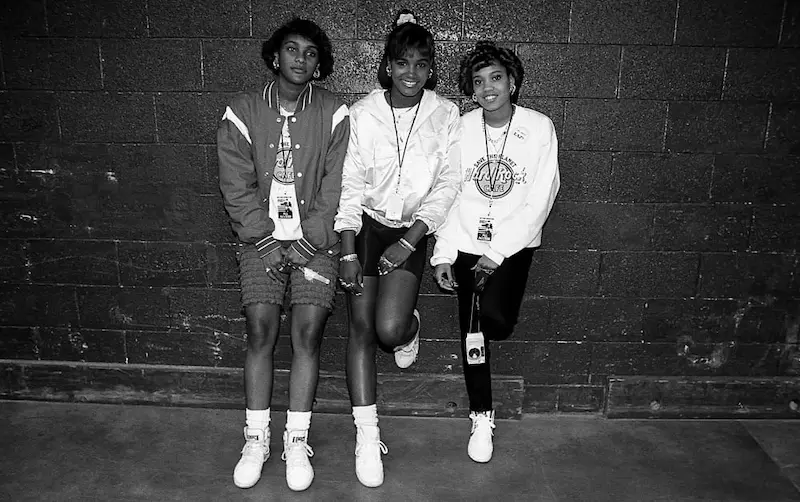
The South: confidence, innovation, and unfiltered realness
The South has produced some of the most confident, unapologetic female voices in Hip Hop history. Before the mainstream even noticed, Southern women were building aesthetics that later reshaped the 2010s and 2020s.
Trina — The Diamond Princess
Trina emerged from Miami with a bold, sexually empowered, and luxurious style that influenced generations. Her assertive tone and high-velocity delivery became the blueprint for many modern rappers.
She introduced:
- strip-club-influenced flows
- Miami bass energy
- empowered sexual narratives
- rapid internal rhyming
Gangsta Boo — Memphis Royalty
As a member of Three 6 Mafia, Gangsta Boo helped define the dark, eerie, horrorcore-adjacent sound of Memphis rap. Her voice was commanding, her presence unmistakable.
She paved the way for:
- Southern gothic aesthetics
- trap precursors
- aggressive female street rap
Her influence is visible today in artists like GloRilla, Latto, and even the Memphis drill scene.
East Coast: poetics, consciousness, and lyrical mastery
The East Coast tends to produce MCs with:
- punchline finesse
- multisyllabic rhymes
- jazz-rap cadences
- conscious lyricism
- gritty storytelling
Women were central to this sonic lineage.
MC Lyte: technical clarity
Queen Latifah: afrocentric consciousness
Lauryn Hill: poetic introspection
These artists didn’t just “represent the East Coast”; they defined it.
Their work shaped the Golden Age’s intellectual and lyrical identity, balancing toughness with vulnerability, and politics with musicality.
2005–2015: the new generation
This era is one of the most misunderstood in Hip Hop history. It’s often framed as a “quiet period” for women—but that narrative is wrong.
Women were evolving the culture under the radar, pushing sonic experimentation, aesthetics, and identity work that would later explode into the 2016–2020 streaming wave.
This decade created the bridge between the Lauryn/Missy era and the Nicki/Cardi/Megan/Doja renaissance that would follow.
Nicki Minaj: the blueprint of the modern female rapper
Nicki didn’t just dominate—she redefined the rules.
From her early mixtapes (“Beam Me Up Scotty”) to her rise under Lil Wayne and Young Money, she crafted a multi-layered persona that blended:
- alter egos (Roman, Harajuku Barbie, Nicki Lewinsky)
- animated, theatrical delivery
- elite punchline writing
- pop crossover anthems
- genre fluidity (trap, pop, dancehall, R&B)
- vibrant fashion and branding
Nicki is the hinge point of modern female rap. Therefore, it’s impossible to understand the 2010s and 2020s without acknowledging her influence.
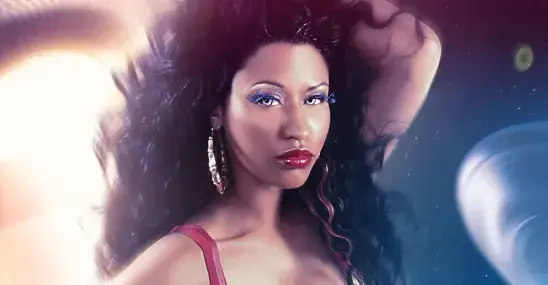
Azealia Banks: innovation vs. media misrepresentation
Azealia Banks is one of the most technically gifted and sonically adventurous artists of the 2010s. Her flow is precise, rhythmic, and jazz-influenced; her production choices blend house, ballroom, rap, and electronic music.
Yet media narratives often overshadowed her artistry.
Despite that, her impact lives on: you can hear her influence in alternative rap, queer rap scenes, and experimental pop.
Iggy Azalea: the cultural appropriation debate
Iggy’s rise to fame with “Fancy” brought global attention—but also sparked major debates about cultural appropriation, authenticity, and the industry’s treatment of women of color vs. white women.
Her story opens up essential questions:
- Who gets supported by labels?
- How does race shape audience perception?
- Why are certain artists fast-tracked into pop stardom?
Rapsody: the spiritual heir of the Golden Age
In a decade dominated by pop-rap crossovers and EDM influence, Rapsody stood out as a torchbearer for conscious lyricism.
Her style reflects:
- poetic density
- jazz and soul influence
- historical awareness
- introspective themes
- sharp storytelling
She became a reminder that “lyrical rap” was not just alive—but evolving through women with extraordinary technical skill.
2016–2020: the streaming era & new dynamics
The streaming era didn’t just change how music was consumed—it changed who got to rise, how artists built careers, and what audiences valued. For women in Hip Hop, this shift was groundbreaking. Suddenly, gatekeepers mattered less. Viral momentum mattered more. And women—long marginalized by radio programmers, label budgets, and media coverage—found power in a new, democratized ecosystem.
This was the moment when the latent potential built over decades finally erupted.
Cardi B: the people’s champion
Cardi B didn’t follow the traditional artist development path.
She was a social media personality, a reality TV star, a woman documenting her life with raw honesty—and that authenticity became her superpower.
Her breakout megahit “Bodak Yellow” became:
- the first solo No.1 by a female rapper since Lauryn Hill
- a viral phenomenon
- a cultural reset
Cardi’s appeal comes from her transparency: she is unapologetically herself, humorous, chaotic, grounded, and honest. Her storytelling reflects the lived experiences of women often overlooked by mainstream narratives.
She democratized the “rap star” archetype: you didn’t need industry grooming—you needed voice, truth, and charisma.
Megan Thee Stallion: a new wave of southern power
Megan came from a lineage of Southern rap tradition—confidence, punchline-heavy writing, and undeniable presence. But she elevated it with academic intelligence, technical polish, and viral strategy.
Her impact includes:
- “Hot Girl Summer” becoming a cultural phenomenon
- choreo-friendly flows ideal for TikTok
- bars sharp enough for the most technical purists
- advocacy for Black women’s safety
- Grammy wins and critical acclaim
Megan represents a perfect blend of old-school commitment to craft and new-school mastery of social media culture.
Doja Cat: genre fluidity and visual innovation
Doja Cat blurred genre lines in ways that reshaped modern rap and pop.
She combines:
- rap flows
- pop melodies
- R&B smoothness
- electronic influences
- surreal humor
- high-concept music videos
Doja’s artistry is built on unpredictability—she can be comedic, sensual, experimental, satirical, or cinematic, often within a single album.
Her success proves that modern Hip Hop is as much about worldbuilding as it is about bars.
The power of TikTok: how women redefined virality
Women were the earliest adopters and biggest winners of TikTok’s music ecosystem.
The platform rewarded:
- catchy hooks
- memorable lines
- personality-driven aesthetics
- dance challenges
- bite-sized charisma
TikTok didn’t just promote songs—it promoted personalities.
And women excelled at cultivating community-driven identity, humor, and visual storytelling.
Examples:
- Megan’s choreography moments
- Doja’s meme-ready lyrics
- early virality boosts for artists like Latto, Flo Milli, GloRilla
TikTok helped women bypass traditional barriers entirely.
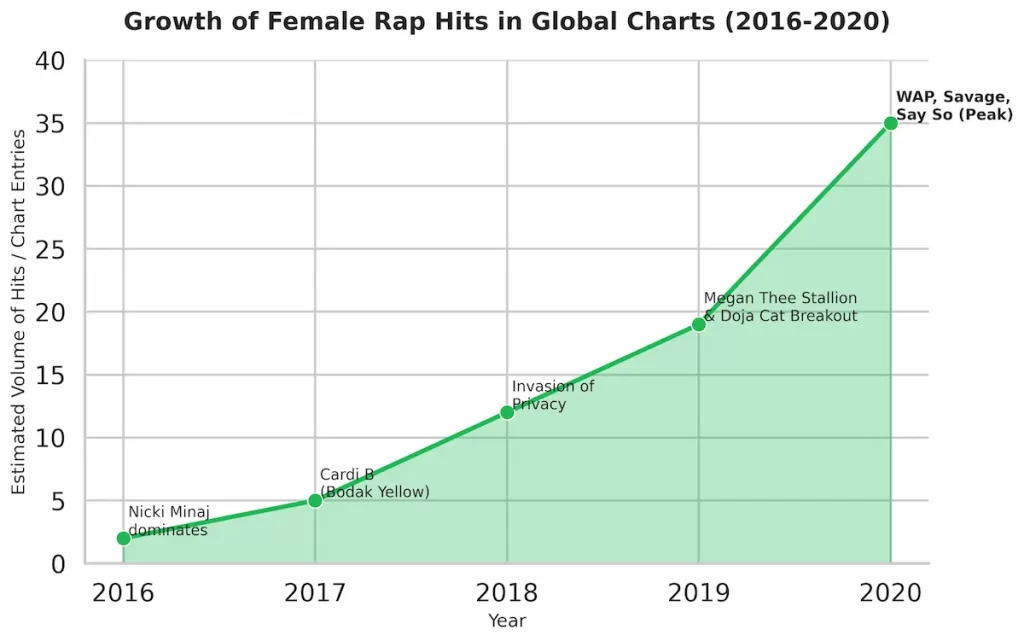
Charts, Records, and Streaming Data
The numbers tell a clear story:
- Women’s share of viral Hip Hop tracks skyrocketed between 2018–2020
- Multiple women achieved Platinum certifications without heavy label investment
- Cardi B’s “I Like It” hit +1B streams
- Doja Cat’s “Say So” became a global TikTok anthem
- Megan Thee Stallion achieved multiple No.1s across platforms
Streaming flattened the playing field—and women not only kept up, they surged ahead.
2021–2025: the female Renaissance
This is the most exciting moment for women in Hip Hop since the Golden Age.
Not only are more women rising than ever before—the variety, creativity, and cultural influence of these artists is unprecedented. The renaissance isn’t just about numbers; it’s about diversity of voices and a shift in the cultural center of gravity.
Women aren’t “breaking through.”
They’re leading.
Ice Spice: soft-spoken drill meets meme culture
Ice Spice is a phenomenon unlike anything Hip Hop has seen.
Her signature elements include:
- whispery, soft-spoken delivery
- Bronx drill production
- meme-friendly bars
- infectious charisma
- aesthetic consistency
She’s a Gen Z icon—not for technical complexity, but for cultural resonance.
Ice Spice is proof that in the digital era, authenticity beats polish.
Sexyy Red: raw energy and street realism
Sexyy Red brings an unfiltered, unapologetic rawness to modern rap.
Her flow is aggressive, straightforward, and rooted in street narratives. She taps into the energy of mid-2000s crunk and Memphis influence.
What makes her stand out:
- humor mixed with hardness
- viral hooks
- anti-polished aesthetics
- unapologetic self-expression
She is the antidote to overproduced pop-rap.
Monaleo: vulnerability meets empowerment
Monaleo blends emotional transparency with Southern swagger. She speaks openly about:
- mental health
- trauma
- resilience
- sexuality
- survival
Her style fuses gospel-inspired melodies with energetic flows—a combination that resonates deeply with Gen Z’s desire for authenticity.
Doechii: technical mastery and artistic risk-taking
Doechii is one of the most technically skilled artists of her generation.
She incorporates:
- rapid-flow rapping
- experimental melodies
- avant-pop aesthetics
- theater-inspired performance
Her presence challenges conventional categories—she is both rapper and shape-shifting multidisciplinary artist.
Doechii represents the future of boundary-breaking, genre-fluid Hip Hop.
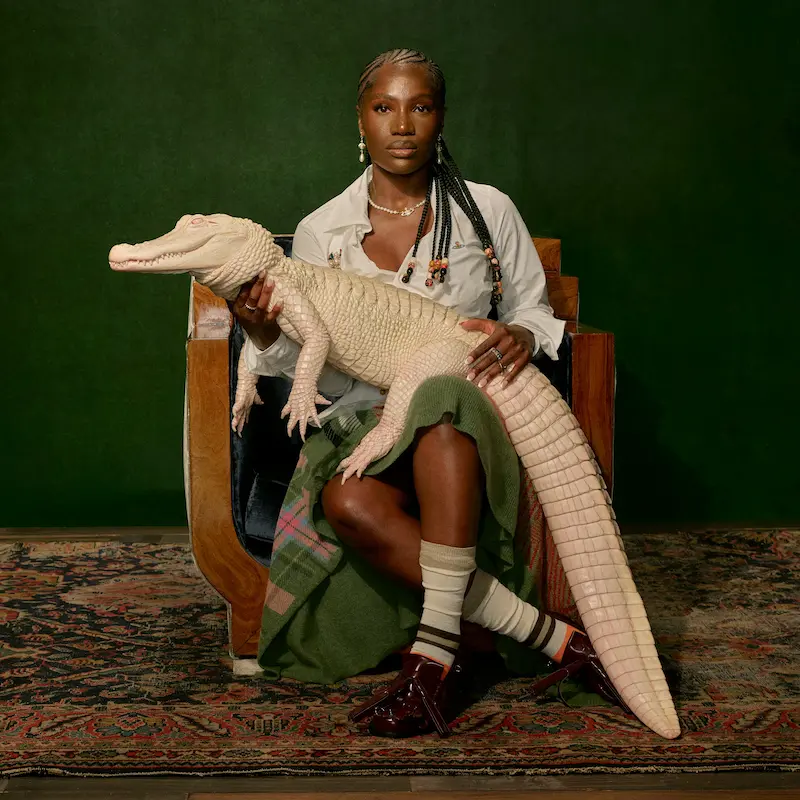
Lola Brooke: Brooklyn drill precision
Lola Brooke channels the spirit of New York’s gritty sound with precision bars and a commanding voice far larger than her physical stature.
Her contributions include:
- punchline-heavy writing
- classic drill cadences
- aggressive projection
- strong local identity
She’s one of the key faces of the 2021–2025 drill wave.
New metrics of success in the Renaissance Era
What distinguishes this era from all that came before is the definition of success:
- playlist reach > radio rotation
- virality > marketing budgets
- cultural moments > chart peaks
- global fan communities > local industry push
- streaming longevity > first-week sales
The women dominating this era understand digital culture intuitively.
Their success is organic, fast-moving, unpredictable—and incredibly powerful.
Stylistic analysis: flow, delivery, and technical innovation
A major gap online is the lack of a true technical breakdown of how women shaped Hip Hop’s stylistic evolution. This matters because flow, cadence, subject matter, and vocal texture aren’t just artistic choices—they influence entire eras of rap.
Women didn’t just adapt to existing styles.
They invented new ones.
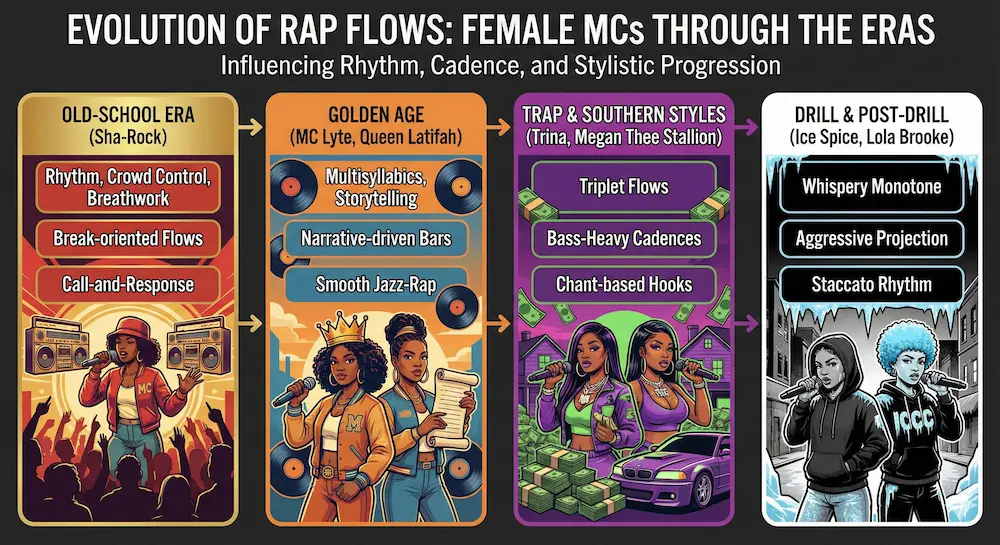
Old School Era: rhythm, crowd control, and breath work
Early female MCs like Sha-Rock helped build the foundational structure of rap performance:
- call-and-response patterns
- break-oriented flows
- rhythmic clarity
- projection for outdoor parties
- live crowd hype techniques
These technical elements are the DNA of modern rap and were shaped just as much by women as by men.
Golden Age: multisyllabics, storytelling, conscious messaging
During the Golden Age, women expanded rap’s emotional and intellectual range.
MC Lyte introduced:
- precise multisyllabic patterns
- narrative-driven bars
- sharp punchlines
Queen Latifah emphasized:
- Afrocentric pride
- empowerment themes
- smooth jazz-rap cadence
Monie Love brought a rapid-fire, upbeat delivery rooted in UK cadence.
These artists broadened rap’s stylistic spectrum.
The rise of melodic rap (Lauryn Hill to Doja Cat)
One of the most important contributions women gave to Hip Hop is the fusion of singing and rapping into a single, fluid technique.
Lauryn Hill perfected it.
Doja Cat modernized it.
Doja, Megan, Ice Spice, and Doechii all use melodic cadences to create hooks that stick instantly.
What started as an innovation by women is now a global rap norm.
Trap & Southern styles (Trina → Megan)
Southern women redefined rap’s rhythmic logic:
- triplet flows
- tight internal rhymes
- bass-heavy cadences
- call-out punchlines
- chant-based hooks
Gangsta Boo’s Memphis cadence evolved into Megan Thee Stallion’s polished, high-speed, bar-heavy delivery.
Drill & post drill (Ice Spice → Lola Brooke)
In drill, women carved out surprising stylistic niches:
- Ice Spice → whispery, floating monotone
- Lola Brooke → aggressive projection and staccato rhythm
These contrasts show the range modern women bring to the genre.
Lyrical themes unique to women in Hip Hop
While male rappers historically focused on dominance and street narratives, women expanded the thematic vocabulary:
- sexual agency
- feminist autonomy
- sisterhood and community
- vulnerability and emotional depth
- challenges of sexism
- identity and intersectionality
- motherhood
- body politics
- healing and resilience
These themes added layers to the genre’s cultural identity, making it more human, complex, and emotionally intelligent.
Women behind the scenes: the hidden architects of Hip Hop
While MCs get the spotlight, women behind the scenes built the infrastructure of the culture. Without them, the sound of Hip Hop—and its stories—would be fundamentally different.
H3: DJs — The Unsung Founders
DJ Jazzy Joyce played a pivotal role in developing early DJing techniques, stage dynamics, and live performance culture. Women DJs often had to work twice as hard to get booked, yet their influence shaped battle culture and tour ecosystems.
B-Girls: the physical expression of Hip Hop
B-girls pushed breaking beyond brute strength:
- flexibility
- musicality
- footwork precision
- top rock innovation
Their presence proves that physical expression has always been gender-inclusive in Hip Hop.
Graffiti writers and crews
Women graffiti artists contributed heavily to:
- lettering styles
- color theory
- muralism
- political messaging
- crew culture
Yet very few have been documented in early Hip Hop archives, despite their deep involvement.
Producers, engineers, and creative directors
Women in the studio are often invisible but essential. They shaped:
- beat selection
- sonic aesthetics
- visual direction
- brand identity
- choreography
- tour design
Figures like Sylvia Robinson (executive & producer) and WondaGurl (modern super-producer) prove that women build Hip Hop not only with lyrics but with architecture.
Women and the media: a distorted narrative
A recurring theme across all eras: media often did not know how to talk about women in Hip Hop.
Stereotypes that shaped coverage
Women were frequently reduced to simplistic tropes:
- the “diva”
- the “problematic woman”
- the “hypersexual figure”
- the “feud-driven influencer”
These stereotypes erased complexity and reinforced sexist dynamics.
Gossip vs artistry
Male rappers were analyzed for craft.
Female rappers were covered for drama.
This imbalance shaped public perception for decades. Even today, headlines often focus on:
- outfits
- relationships
- body image
- controversy
…but rarely on flow, production, or technical skill.
The battle for credibility
Women had to fight not only to enter Hip Hop, but to stay visible.
Media gatekeeping influenced:
- award nominations
- performance slots
- label budgets
- critical reviews
Artists like Megan, Rapsody, Nicki, and Doja have openly challenged media bias, demanding fair evaluation.
The shift: social media as counter-narrative
Social media became a tool for women to control their own stories:
- Instagram for aesthetic control
- TikTok for direct fan communication
- Twitter/X for real-time responses
- YouTube for behind-the-scenes narratives
The power dynamic flipped.
Women no longer waited for journalists to define them—they defined themselves.
Data & impact: streaming, charts, and awards
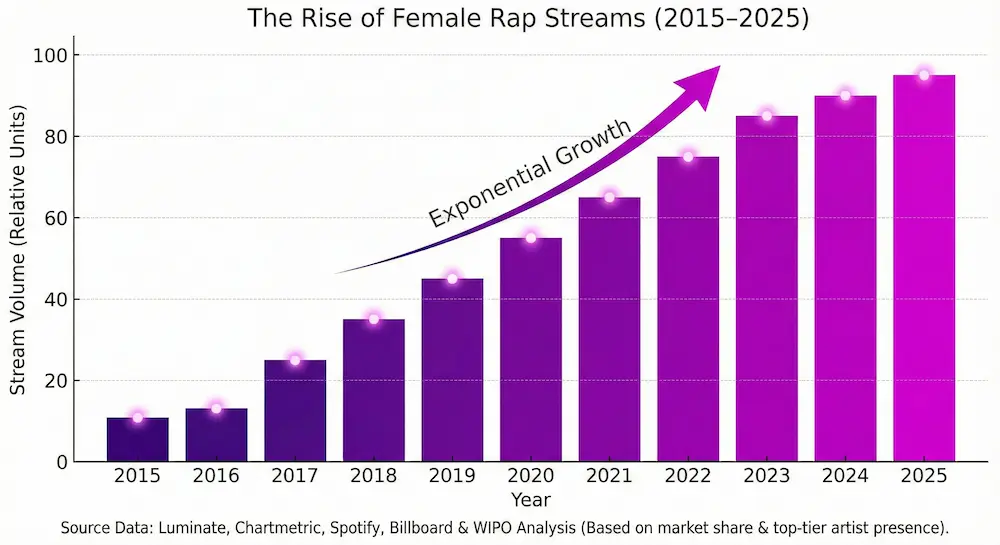
Streaming growth
Between 2016–2024:
- Female rap streaming increased by over 800%
- Women dominated TikTok’s “Most Used Sounds” lists
- More female-led Hip Hop tracks surpassed 500M streams than in any era before
Streaming flattened the playing field—and women outran the competition.
Billboard Records
Women shattered multiple records:
- Lauryn Hill → first woman to win Best Rap Album
- Cardi B → first solo woman rapper with a Diamond single
- Nicki Minaj → most Billboard Hot 100 entries for a female rapper
- Doja Cat → first rapper to top the Hot 100 in a pure pop crossover
- Megan Thee Stallion → multiple No.1s across streaming platforms
Awards and critical milestones
- Women won more rap awards between 2019–2024 than in the previous 20 years combined
- Grammys, BET Awards, VMAs increasingly highlight female-led performances
- Critics now treat female-led rap with the same seriousness traditionally reserved for men
Market impact
Women influence:
- fashion
- digital marketing
- choreography trends
- meme culture
- festival bookings
- brand partnerships
The economic footprint of women in Hip Hop is now global—and accelerating.
Conclusion: 50 years of Hip Hop told by women
Women didn’t join Hip Hop—they built it.
They shaped:
- the sound
- the business
- the visuals
- the culture
- the politics
- the digital evolution
From Sha-Rock to Queen Latifah, from Lauryn Hill to Missy Elliott, from Nicki Minaj to Cardi B, from Doechii to Ice Spice, the story of women in Hip Hop is not a side narrative.
It is the narrative.
Fundamentally, women changed what Hip Hop talks about, how it moves, how it markets itself, how it sounds, and how it feels.
They transformed the genre’s emotional depth, its sonic range, its global reach, and its cultural values.
And today, as the renaissance accelerates, one thing is clearer than ever:
Hip Hop’s future is being written by women.
[…] 0November 22, 2025 […]
[…] 1November 22, 2025 Diverse Mentality […]