A War Without Expiration Date
In the history of Hip Hop, most feuds are lyrical sparring matches that end in a collaboration years later. The war between 50 Cent and Ja Rule is different. It wasn’t just about rhymes; it was about survival.
Spanning over two decades, this conflict transformed from street violence in Queens involving baseball bats and knives. Eventually, it turned into a federal investigation that dismantled the Murder Inc. empire. Finally, it evolved into a psychological war fought on Instagram and Groupon.
Why does 50 Cent hate Ja Rule so much? Did he really buy 200 tickets just to leave a concert empty? And how does the recent death of Irv Gotti in 2025 mark the final, tragic chapter of this saga? In this complete history, we uncover the truth behind the most destructive feud in rap history.
The Origin Story (1999): Two Neighborhoods, One King
The beef didn’t start in a recording studio; it started on the streets of Southside Jamaica, Queens.
The “Chain Snatching” Incident
According to 50 Cent, the tension began in 1999 when a friend of his, Lil Troy, robbed Ja Rule at gunpoint in Queens, stealing his chain. Consequently, Ja Rule saw 50 Cent at a club (Club Amazura) greeting the very man who had robbed him.
“I started off with something that was real small… a friend of mine robbed him… and he seen me saying what’s up to the kid. And then he felt like… I was [conspiring] with the kid.” — 50 Cent
Ja Rule vehemently denies this version. In his autobiography Unruly, he claims that Supreme McGriff (the notorious drug lord and “shadow boss” of Murder Inc.) intervened and retrieved his chain immediately. For Ja Rule, the beef started because of 50 Cent’s jealousy after the director snubbed him at the ‘Murda 4 Life’ video shoot on Jamaica Avenue.
The “Murda 4 Life” Snub: Ja Rule’s Perspective
While 50 Cent insists it was about loyalty and a robbery, Ja Rule offers a completely different narrative: jealousy. In his autobiography and various interviews, Ja Rule claims the animosity began at the video shoot for “Murda 4 Life” on Jamaica Avenue, Queens. At the time, Ja Rule was the rising star of Murder Inc., while 50 Cent was still struggling to break through.
“It was a lot of people out there… 50 was out there. He was trying to get some shine… and I was just like, ‘Yo, look at me!'” — Ja Rule (recalled in transcripts)
According to Ja Rule, 50 Cent felt slighted because the director and the crowd were focused entirely on Ja Rule, ignoring the neighborhood local. This feeling of being “left behind” while a rival from Hollis succeeded allegedly fueled 50’s resentment long before any chain was snatched.
Visual Warfare: The “Your Life’s on the Line” Video
Long before “Wanksta,” 50 Cent fired a warning shot that confused the masses but sent a clear message to Murder Inc. In the music video for “Your Life’s on the Line,” 50 Cent employed a mocking tactic that would become his trademark.
- The Mockery: In the video, 50 Cent looks directly at the camera and screams “Murda!”—mimicking Ja Rule’s signature ad-lib.
- The Chain: Rumors swirled that in certain shots of the video, 50 Cent was actually wearing the jewelry snatched from Ja Rule during their altercation.
While the song didn’t top the charts, it was a masterclass in psychological warfare. 50 Cent wasn’t just dissing Ja Rule; he was impersonating him, stripping away his tough guy image frame by frame.
Escalation: Baseball Bats in Atlanta
The first physical explosion occurred in Fall 1999 in Atlanta, outside a hotel where both rappers were booked to perform.
The Incident: 50 Cent approached Ja Rule to talk, after their mutual manager, Chaz ‘Slim’ Williams, brokered the meeting. The conversation quickly turned violent.
- Ja Rule’s Weapon: Ja Rule was carrying a baseball bat.
- The First Swing: 50 Cent admits to punching Ja Rule first (“snuffed him”) because he felt threatened by Ja’s aggressive body language and the bat.
- The Brawl: Immediately, a massive fight ensued involving Ja Rule’s crew. 50 Cent claims he snatched Ja Rule’s chain during the scuffle, while Ja Rule claims 50 ran away after being beaten.
“I hit him because what he was saying in conversation was telling me to hit him… And for the chain, yeah, I took the chain in that altercation.” — 50 Cent
The result? Ja Rule appeared in public with a black eye, which he tried to hide behind sunglasses, while 50 Cent allegedly wore the stolen chain in his “Your Life’s on the Line” music video.
Blood on the Floor: The Hit Factory Stabbing (March 2000)
The violence reached its peak in New York City at the legendary Hit Factory recording studio.
50 Cent was recording upstairs when Murder Inc. members—including Black Child and Irv Gotti—arrived. Tipped off that 50 was in the building, they rushed his studio room. In the ensuing chaos:
- The Injury: 50 Cent drove himself to the hospital with a stab wound, receiving three stitches.
- The Attack: Ja Rule allegedly hit 50 with a crutch (he had a broken leg or was using a friend’s crutch).
- The Stabbing: Black Child pulled a knife and stabbed 50 Cent in the back.
“I got stabbed… I didn’t even go to the hospital… I went home. My grandmother told me that she heard I was stabbed… she cleaned it off with peroxide.” — 50 Cent
The “Order of Protection” Controversy: This incident birthed the biggest stigma of 50 Cent’s career. Murder Inc. claimed for years that 50 Cent filed an Order of Protection (restraining order) against them, labeling him a “snitch.” However, investigations suggest that the studio’s injured engineer called the police. Consequently, the state filed the mandatory order, not 50 Cent personally.
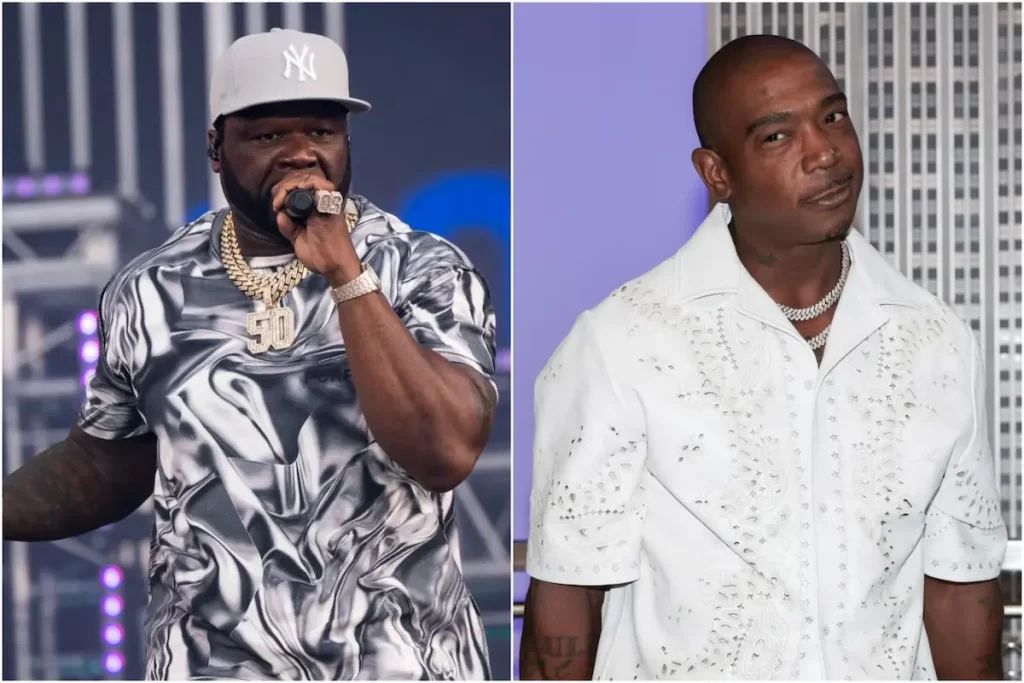
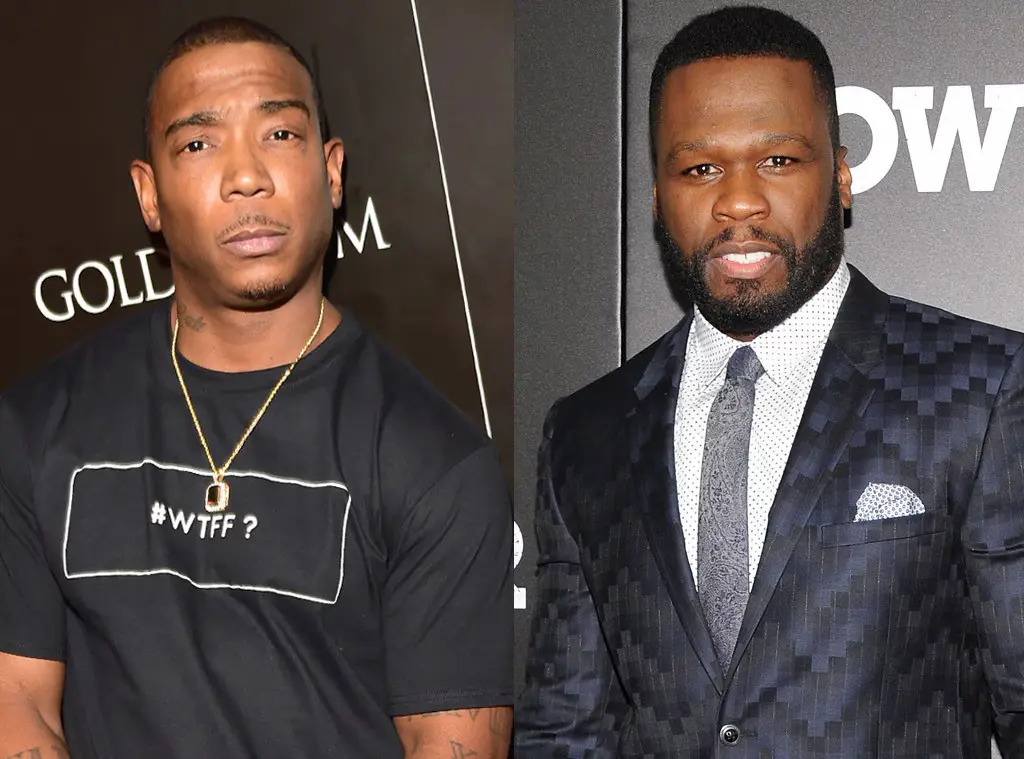
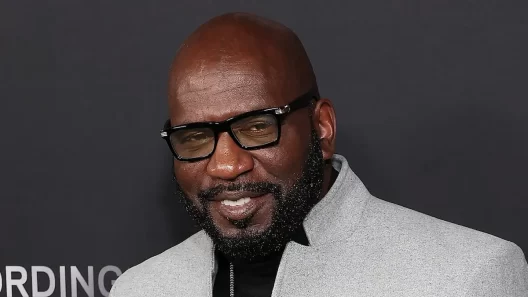
(Scott Garfitt / Invision/Associated Press, left; CJ Rivera / Invision/Associated Press)
The Shooting: 9 Bullets and “Ghetto Qu’ran”
On May 24, 2000, the beef turned from assault to attempted murder. 50 Cent was shot 9 times at point-blank range outside his grandmother’s house.
Why was he shot? While many suspected Ja Rule’s camp, the order allegedly came from Supreme McGriff. Supreme was furious about 50 Cent’s song “Ghetto Qu’ran,” which detailed the history of the Supreme Team drug gang in Queens. Supreme viewed the lyrics as ‘dry snitching.’ He believed 50 Cent was making public secrets that could alert the Feds.
“When Chaz aka Slim cut 50 loose, he was condemned to death… 50 didn’t have anyone backing him. He became a target marked for death.” —
Reportedly, the alleged shooter was Darryl “Hommo” Baum, a close associate of Mike Tyson. Baum was killed just three weeks later, allegedly in an unrelated dispute, though rumors of retaliation persisted for years.
This assassination attempt forced 50 Cent to turn his life into a fortress—a high-security reality that Hot Rod later experienced firsthand inside the Connecticut mansion.
The Blueprint: How 50 Cent Stole Ja Rule’s Sound
Before the major label deal, 50 Cent waged a guerrilla war on the streets using mixtapes. This wasn’t just about rapping; it was a hostile takeover of Ja Rule’s own music. On his legendary tape 50 Cent Is the Future, 50 Cent took Ja Rule’s biggest radio hits—which featured R&B hooks and softer beats—and rapped gangsta lyrics over them.
- The Strategy: He mocked Ja Rule for singing too much (“wanna-be pop star”) while simultaneously proving he could flow better on Ja’s own beats.
- The Impact: By the time 50 Cent released his own singles, he had already conditioned the streets to view Ja Rule as “soft” and “fake.” He didn’t just beat Ja Rule; he hijacked his audience before the battle officially started.
The Exile: Blackballed by the Industry
To understand the magnitude of 50 Cent’s comeback, you have to understand how deep of a hole he was in. Immediately after the shooting in 2000, Columbia Records dropped him. The industry didn’t just ignore him; they feared him.
- Banned from Studios: According to reports, recording studios in New York City refused to let 50 Cent book time. They were terrified that the violence following him would spill into their businesses.
- The Industry Blacklist: Executives who once wined and dined him now wouldn’t return his calls. He was seen as a liability, a walking dead man.
This period of isolation is crucial because it forced 50 Cent to circumvent the traditional industry entirely, leading to the mixtape revolution that Ja Rule never saw coming.
The Music War: “Back Down” & The Strategic Mistake
After surviving the shooting, Columbia Records dropped and blackballed 50 Cent. But in 2002, he signed with Eminem and Dr. Dre, securing the most powerful backing in the industry.
Ja Rule’s Fatal Error: However, Ja Rule, feeling the pressure, made a catastrophic mistake: he threatened Eminem and Dr. Dre in interviews and on tracks (like “Loose Change”), dragging the entire Aftermath/Shady machine into the war.
“Em, you claim your mother’s a crackhead… and Kim is a known slut…” — Ja Rule (“Loose Change”)
The Nuclear Response: 50 Cent released “Back Down” on Get Rich or Die Tryin’. It wasn’t just a diss song; it was a character assassination. He mocked Ja Rule for singing, questioned his street credibility, and turned the public against him.
Simultaneously, Eminem and Busta Rhymes joined the fray on tracks like “Hail Mary” and “Go To Sleep,” overwhelming Ja Rule with superior lyrical firepower.
With the competition destroyed, 50 Cent turned his attention to building an empire, eventually signing the next generation of talent like Hot Rod.
Lyrical Autopsy: Why “Back Down” Was Lethal
To understand why Ja Rule’s career never recovered, you have to dissect “Back Down”. It wasn’t just a diss track; it was a psychological dismantling. Unlike Nas’ Ether (which attacked Jay-Z’s character), Back Down attacked Ja Rule’s masculinity and his core fan base.
50 Cent systematically stripped away Ja Rule’s tough-guy persona with lines that became playground insults:
“You’re like a pop tart, sweetheart, you’re soft in the middle / I eat you for breakfast, the watch was exchanged for your necklace.”
He also exposed Ja Rule’s alleged identity crisis, accusing him of copying Tupac Shakur:
“You ain’t Pac, you’re a changing face / You’re a changing voice, you’re a disgrace to the race.”
By the end of the track, 50 Cent had successfully rebranded Ja Rule from a “gangster rapper” to a “singing pop star” in the eyes of the streets. It made it embarrassing for male fans to be caught listening to Murder Inc.
Total War: Involving Eminem’s Daughter
The beef escalated from a Queens rivalry to a global industry war when Ja Rule crossed a red line: he mentioned Eminem’s daughter, Hailie. On the track “Loose Change”, Ja Rule rapped:
“Em, you claim your mother’s a crackhead / And Kim is a known slut / So what’s Hailie gon’ be when she grows up?”
This was a fatal error. Eminem, usually content to stay out of street beefs, unleashed the full force of Shady Records. He recruited Busta Rhymes (who also had issues with Ja Rule) and Dr. Dre for the track “Hail Mary 2003”.
- The Result: A lyrical firing squad. Busta Rhymes delivered one of the most aggressive verses of his career, and Eminem systematically dismantled Ja Rule’s credibility. It was no longer one-on-one; Ja Rule was now fighting the three biggest rappers on the planet simultaneously.
The Proxy War: G-Unit vs. Murder Inc.
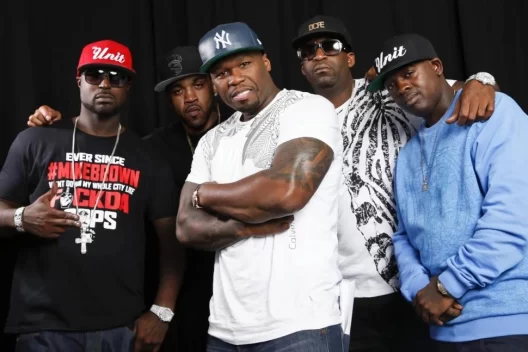
This wasn’t just a duel between two generals; it was a war between two armies. As 50 Cent rose, he brought G-Unit(Lloyd Banks, Tony Yayo, and Young Buck) with him, and they engaged in direct combat with Murder Inc.’s soldiers (Black Child, Cadillac Tah, and Vita).
The Mixtape Barrage: While 50 Cent focused on Ja Rule, Lloyd Banks and Tony Yayo decimated the rest of the Murder Inc. roster on the mixtape circuit.
- G-Unit’s Strategy: They flooded the streets with free CDs (50 Cent Is the Future, No Mercy, No Fear), using Murder Inc.’s own beats to mock them.
- Murder Inc.’s Response: Black Child, the man who stabbed 50 Cent, released diss tracks like “There’s a Snitch in the Club”, but they failed to gain traction. The public perception was already shifting: G-Unit looked like a disciplined military unit, while Murder Inc. looked chaotic and defensive.
This “Proxy War” ensured that even if Ja Rule took a break, he was getting hit from all sides by Banks, Buck, and Yayo.
The Feds Step In: The Raid on Murder Inc. (2003)
While 50 Cent was destroying Ja Rule on the charts, the FBI was destroying Murder Inc. from the inside.
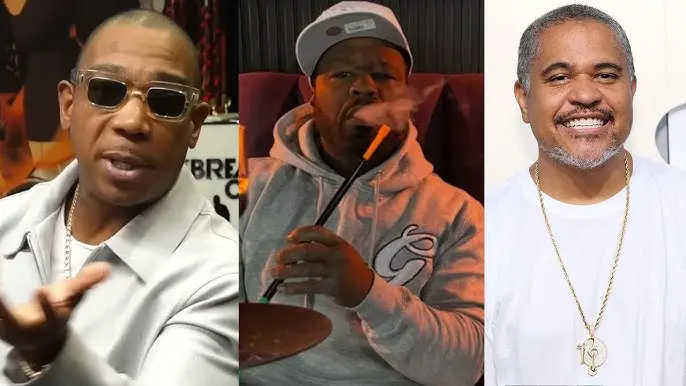
In January 2003, federal agents raided the Murder Inc. offices. The investigation focused on Supreme McGriff and whether Irv Gotti used the record label to launder drug money for the Supreme Team.
- The accusation: That Murder Inc. was essentially a front for Supreme’s criminal enterprise.
- The lyrics: Investigators literally cited 50 Cent’s lyrics from “Ghetto Qu’ran” as a roadmap to the gang’s hierarchy.
The raid froze the label’s assets and tainted their reputation. While Irv Gotti was eventually acquitted in 2005, the damage was done. The judge sentenced Supreme McGriff to life in prison, and Murder Inc. crumbled under the legal pressure.
It was a brutal lesson in how quickly the industry can turn on you—a theme that would resurface years later during Hot Rod’s own battle with label politics.
The Smoking Gun: Text Messages and Movie Sets
The FBI didn’t just raid the offices on a hunch; they had built a case using Murder Inc.’s own arrogance against them. Investigators focused heavily on the production of a movie titled “Crime Partners”, financed by Murder Inc. According to court documents and transcripts, federal agents intercepted text messages (via pagers) between Irv Gotti and Supreme McGriff.
- The Evidence: The messages allegedly discussed laundering drug money through the film’s budget.
- The “50 Cent” Texts: Crucially, agents found texts where Supreme discussed his obsession with 50 Cent, further linking the street violence to the corporate office.
This turned the feud from a “rap beef” into a federal RICO case. The government argued that the entire record label was simply a washing machine for Supreme McGriff’s drug profits.
The Failed Peace Treaty: Louis Farrakhan Intervenes
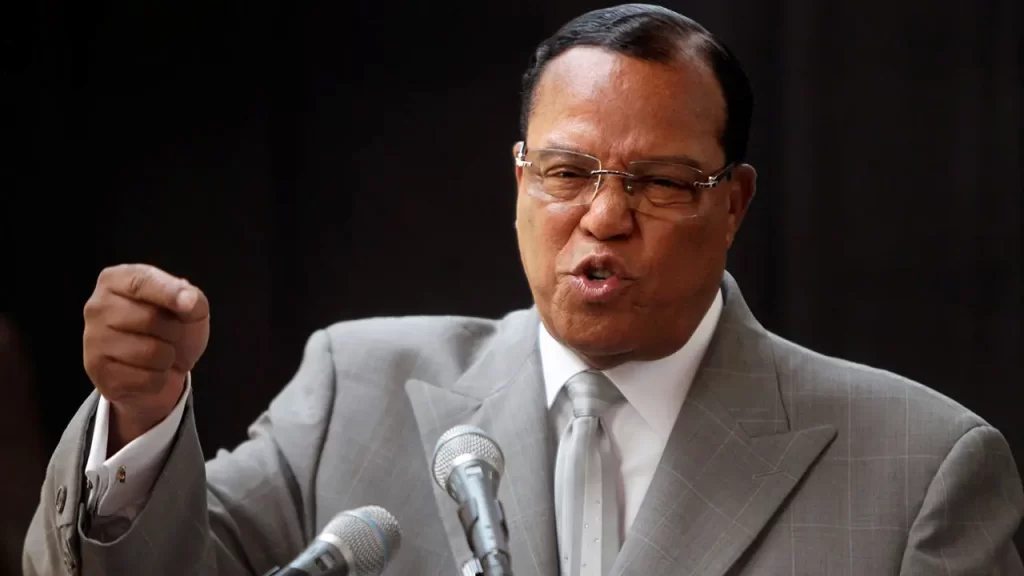
By late 2003, the violence had escalated to a point where community leaders feared a repeat of the Tupac vs. Biggie tragedy. Enter Minister Louis Farrakhan. The Nation of Islam leader organized a secret peace summit to squash the beef before more blood was spilled.
The Interview That Backfired: Ja Rule later appeared in a televised interview claiming that the beef was “over” out of respect for Farrakhan.
“We sat down… and we agreed that we’re not going to kill each other.” — Ja Rule
50 Cent’s Reaction: 50 Cent, however, saw this as a sign of weakness. He refused to publicly back down or shake hands. In the eyes of the hip-hop community, Ja Rule looked like he was pleading for a truce because he was losing, while 50 Cent looked unstoppable and unwilling to compromise. This moment cemented 50’s image as the “bully” who wouldn’t stop until his enemy was completely destroyed.
The Numbers Game: Analyzing the Decline
While the FBI raid crippled Murder Inc.’s operations, the public simply stopped buying the music. The sales data paints a clear picture of how effective 50 Cent’s smear campaign was.
Prior to the beef, Ja Rule was untouchable:
- Rule 3:36 (2000): 3x Platinum
- Pain Is Love (2001): 3x Platinum (Top of the charts)
As the feud peaked in 2003, the numbers crashed:
- Blood in My Eye (2003): Released at the height of the war, this album struggled to reach Gold status and sold significantly less than his previous efforts (approx. 468,000 copies).
In contrast, 50 Cent’s Get Rich or Die Tryin’ sold 872,000 copies in its first week alone and went on to sell 12 million copies worldwide. The market had spoken: the “G-Unit Era” had begun, and the “Murder Inc. Era” was over.
Modern Warfare: The Groupon Stunt (2018)
Years after the physical danger subsided, 50 Cent evolved the beef into a form of high-art trolling. The most viral moment occurred in October 2018.
Specifically, 50 Cent noticed that Ja Rule was scheduled to perform a concert in Arlington, Texas, and tickets were selling poorly on discount sites.
The Ultimate Petty Move: 50 Cent went on Groupon and purchased 200 tickets for the front rows.
- Cost: Approximately $3,000 (roughly $15 per ticket).
- The Goal: To ensure the seats directly in front of Ja Rule were completely empty during the show.
He posted a photoshopped image of himself sitting in an empty arena on Instagram with the caption:
“I just bought 200 seats in the front so they can be empty. LOL.”
Ja Rule responded by claiming he “gets under 50’s skin” and calling him a liar, but the damage to his public image was massive. It reinforced the narrative that 50 Cent holds the ultimate power in their dynamic: money and relevance.

The Final Chapter: Irv Gotti’s Death (2025)
The war between 50 Cent and Murder Inc. seemingly came to a tragic halt on February 5, 2025, with the death of Irv Gotti.
The Murder Inc. founder passed away at age 54 due to complications from diabetes and a series of strokes. In fact, for decades, Gotti was the “General” behind Ja Rule, financing the battles and directing the attacks against 50 Cent.
50 Cent’s Reaction: True to his nature, 50 Cent did not offer a traditional condolence. Even in death, the beef simmered. When rumors of Gotti’s declining health circulated shortly before his passing, 50 Cent took to social media with a comment that walked the line between trolling and indifference:
“Damn I wanted him to see my new shows yo!”
Gotti’s death marks the official end of the Murder Inc. era. The man who once claimed he would “destroy” 50 Cent was gone, leaving 50 as the undisputed survivor of a feud that outlived its own creators.
Ja Rule Strikes Back (Late 2025): “I’m the Better Rapper”
Just months after the passing of Irv Gotti, and despite the overwhelming public consensus that 50 Cent won the war, Ja Rule made a controversial attempt to rewrite history.
In a November 2025 interview on Carmelo Anthony’s podcast (7PM in Brooklyn), Ja Rule reignited the debate by claiming his catalog has stood the test of time better than his rival’s.
“I feel like I was the better rapper. I felt like I made the better records. I feel like my records aged better still.”— Ja Rule
Ja Rule argues that he pioneered the “duet formula” (rap + R&B hook) which influenced an entire generation of melodic rappers, implying that 50 Cent’s aggressive style is less timeless.
The Reality Check: What Do the Numbers Say?
While Ja Rule is entitled to his opinion, the data tells a different story. In our recent deep-dive analysis, we broke down the streaming numbers, and they paint a brutal picture of the current landscape:
- Daily Streams: 50 Cent’s In Da Club generates nearly 900,000 daily streams on Spotify, compared to Ja Rule’s biggest hit Always On Time, which clocks in at around 226,000.
- Total Streams: As a lead artist, 50 Cent has amassed over 12 billion streams, while Ja Rule sits at approximately 2 billion.
- YouTube Dominance: 50 Cent’s In Da Club video is the most-watched solo hip-hop video of the 2000s (pre-2010), dwarfing Ja Rule’s visual catalog.
As we concluded in the video: “That’s your opinion… But the world thinks differently. That’s where we can get factual.”
It seems that while Ja Rule fights for his legacy in interviews, the listeners have already voted with their play buttons.
Conclusion: The Last Man Standing
Looking back at the history, the winner is undeniable. 50 Cent survived 9 shots, destroyed his rival’s career, and outlived his enemies.
With Irv Gotti passing away in 2025 and Supreme McGriff serving a life sentence, 50 Cent stands alone atop the empire he built. Ja Rule, while still active, is left without his general, forever shadowed by the man who bought the front row just to see him fail.
From snatching chains in ’99 to the tragic end of 2025, this remains the most ruthless beef hip hop has ever seen.
[…] 0December 28, 2025 […]
[…] 0December 28, 2025 […]
[…] era; it started a war between two best friends: Dr. Dre and Eazy-E. It was a feud that birthed two legendary record labels (Death Row vs. Ruthless), launched the G-Funk era, and ended in one of the most tragic deaths in […]