How to use this guide (and what “Battle vs. War” means
- What you’ll get: a linear timeline from early collaborations to the 2024 diss barrage and the 2025 aftermath—Super Bowl, Grammys, and legal actions.
- How to navigate: jump to 2013 for “Control,” to 2024 for the diss sequence (Like That → Push Ups → Taylor Made Freestyle → Euphoria → 6:16 in LA → Family Matters → Meet the Grahams → Not Like Us → The Heart Part 6), or to 2025 for the Super Bowl/Grammys/legal wrap-up.
- Battle vs. War: the battle is the day-by-day exchange of diss tracks; This concept of the ‘answer record’—a direct lyrical response to a competitor—wasn’t invented by Drake or Kendrick. It was commercialized during the Roxanne Wars, setting the standard for every rap feud that followed. Meanwhile, the territorial ferocity—like Compton vs. The Embassy—traces back to the Bridge Wars, where boroughs battled for the culture’s soul. The war is the long arc—credibility, culture, reputational fallout, and who “wins” the narrative over time.
| Date | Event / Track | Key Moment | Winner (Public Consensus) |
| Aug 2013 | “Control” Verse | Kendrick calls out Drake & names names | Kendrick (lyrical impact) |
| Oct 2023 | “First Person Shooter” | J. Cole claims “The Big Three” exist | Neutral (setup) |
| Mar 2024 | “Like That” | Kendrick rejects the “Big Three” | Kendrick (shock value) |
| Apr 2024 | “Push Ups” / “Taylor Made” | Drake mocks Kendrick’s size & uses AI | Drake (initial pressure) |
| May 2024 | “Meet the Grahams” | Kendrick exposes alleged family secrets | Kendrick (psychological damage) |
| May 2024 | “Not Like Us” | The global club anthem drops | Kendrick (cultural dominance) |
| Feb 2025 | Super Bowl LIX | Kendrick performs the victory lap | Kendrick (mainstream victory) |
2009–2012: From orbit to overlap (the pre-feud gravity)
The seeds of the drake and kendrick feud history don’t begin in open hostility; they begin in mutual orbit. Features, shared spaces, and a sense that both artists were ascending in different lanes—Drake as pop-rap’s commercial juggernaut, Kendrick as the precision lyricist with a moral core. This is the set-up period that makes 2013 matter.
In these years, Kendrick’s voice steeped in West Coast cadence and community-reportage, coalesces around authenticity as ethos, while Drake’s persona practices a flexible code-switch between confessional R&B and competitive bars. The tension isn’t yet personal; it’s positional. Kendrick follows a long lineage of West Coast legends who engaged in civil wars, much like the historic Dr. Dre vs Eazy-E beef.
2013: “Control” and the Big Three (the spark—and why it burns)
Kendrick’s verse on “Control” does two things at once: it names competitors (including Drake and J. Cole) and reframes aspiration, not as clout, but as claim to the mountaintop. However, the culture reads it as a challenge, not a diss; yet it re-orders the hierarchy. From here on, Drake vs Kendrick rivalry timeline is live.
Language as a weapon (autenticity, Blackness, AAVE)
Kendrick deploys boast and burden: the boast of supremacy, the burden of representing West Coast lineage and Black civic memory. Drake, an omnivorous hitmaker, is suddenly asked not just, “Can you rap?” but “Are you of this canon?” The rhetorical game shifts: bars begin to be judged against background, who you are, where you’re from, and who can claim the story.
The Cold War & the setup (2013–2023): from subliminals to “The Big Three”
While 2013 sparked the fire, the following years were defined by a “Cold War“: veiled lines, interview quips, and a battle for narrative dominance. It wasn’t about direct hits, but about audience sorting—radio dominance (Drake) vs. critical laurels (Kendrick).
Here are the key moments of tension often overlooked:
- August 2013 (the spark): Kendrick’s verse on “Control” names Drake specifically, challenging him for the throne. Drake responds in interviews, calling it “ambitious” but dismissing the threat.
- October 2013 (the BET Cypher): Kendrick doubles down in a freestyle, seemingly mocking Drake’s sensitivity.
- 2015 (the ghostwriting allegations): while Meek Mill launched the ghostwriting accusations, Kendrick subtly reinforced them with lines in “King Kunta” (“I can dig rapping, but a rapper with a ghost writer? What the f**k happened?”).
- 2016-2017 (the interview era): both artists used media appearances (ESPN, complex interviews) to throw subtle shade without ever naming names directly.
- 2018 (the Pusha T Case Study): Drake’s feud with Pusha T results in “The Story of Adidon,” a brutal track exposing Drake’s son. This moment punctured Drake’s aura and established the tactic of using “history and family” as ammo—a blueprint Kendrick would later perfect.
- Late 2023 (the trigger): J. Cole and Drake release “First Person Shooter,” claiming they form the “Big Three” along with Kendrick. This claim of parity is exactly what provokes Kendrick to respond.
(Interpretive note): this entire decade was a semantics war. Authenticity became performative literacy: who can show the work at the bar line, and whose work the culture wants to canonize.
2024: From cold war to open war (day-by-day)
Below is the drake kendrick feud 2024 timeline, in order. Dates are based on your research archive.
March 22 — “Like That” (Future & Metro Boomin ft. Kendrick Lamar)
Kendrick’s verse rejects “Big Three” parity and names the target—without euphemism. This is ignition.
April 13–19 — “Push Ups” (Drake)
Leaks swirl mid-April; the official release lands April 19. On “Push Ups” Drake swings at Kendrick’s stature, image, and affiliations; he’s daring K-Dot to step outside coded language. (Where versions/edits/leaks exist, we keep the primary release in view.)
April 19 — “Taylor Made Freestyle” (Drake; later removed)
The AI-voice gambit (2Pac, Snoop) crosses a line; Tupac’s estate objects and the track is pulled. The rhetorical fallout is huge: can you wear the voice of Black ancestors like a costume? Even before legal language, the cultural verdict sounded like “no.”
April 30 — “Euphoria” (Kendrick)
“Euphoria” is a surgical six-minute clinic: timbre switches, cadence games, ethos attacks. This is where Kendrick starts building the case, not just the song. Peaks high on charts; becomes a crowd-chant line at shows.
May 3 (morning) — “6:16 in LA” (Kendrick)
Likewise, “6:16 in LA” is a quiet-storm precision strike: credibility, circles, and whispers. The subtext speaks to network authenticity—who’s really from where they say.
May 3 (evening) — “Family Matters” (Drake)
Drake alleges domestic abuse and paternity scandal—a leap from sport to character assassination. The family becomes a rhetorical weapon. (We treat these as allegations in lyrics.)
~40 minutes later — “Meet the Grahams” (Kendrick)
A dark letter to Drake’s family: sex-predation allegations, a secret daughter, and the Embassy mansion framed as a trafficking site. It’s the ugliest moment; it also reverses the family weapon back onto Drake. Drake denies these claims the next day.
May 4 — “Not Like Us” (Kendrick)
The club-crushing diss that becomes culture. Mustard’s bounce, community call-and-response, a hook designed to live in the air. It’s widely regarded as the feud’s defining track; it breaks streaming records and will later sweep five Grammys. Drake fires back with “The Heart Part 6” on May 5 and denies the allegations.
May 5 — “The Heart Part 6” (Drake)
Denials, reframing, and an argument that Kendrick was fed false intel. Drake signals battle fatigue, implying the exchange has turned from sport to smear.
May 7–9 — The Embassy incidents (Toronto)
A security guard is seriously injured in an early-morning shooting outside Drake’s home (May 7), followed by trespass incidents on May 8–9. Police do not attribute motive and note only that the feud is known to investigators. The case remains under investigation in your latest docs.
May 10–12 — “Battle over” (public notes)
Top Dawg tweets “This battle is over”; Drake posts “Good times, summer vibes up next.” The diss salvos pause; the narrative does not.
June 19 — The “Pop Out” concert (the civic ritual)
On Juneteenth (June 19, 2024) at the Kia Forum, Kendrick turns victory into civic ritual: Dr. Dre whispers the opening line; “Not Like Us” is performed five times—each iteration with a different communal flourish; a group photo crowds the stage with West Coast figures; Russell Westbrook and DeMar DeRozan appear; unity is the point. The show reads as both celebration and closing argument.
Kendrick converts Compton/LA into a semantic counterweight to Drake’s Embassy imagery. The city becomes evidence: flesh-and-blood community over mansion myth.
“Friends & Allies of Kendrick (Enemies of Drake)” — the fallout you asked to surface
Following “Like That,” Drake found himself simultaneously feuding with Kendrick Lamar, Metro Boomin, Future, A$AP Rocky, and The Weeknd, while publicly falling out with and unfollowing formerly friendly figures like J. Cole and LeBron James due to their association with Kendrick’s side or the beef itself.
- Metro Boomin & Future: “Like That” ignites the conflict; Metro’s follow-ups keep pressure on Drake.
- A$AP Rocky: The Weeknd’s “All to Myself” with Rocky is read as a Drake shot; Drake unfollows Rocky.
- The Weeknd: once a close ally, he takes shots on “All to Myself”; Drake unfollows.
- J. Cole: apology to Kendrick; Drake targets him in a diss.
- LeBron James: attends The Pop Out and appears in the “Not Like Us” video; Drake unfollows.
- Rick Ross: sides with Kendrick; separate hostilities with Drake continue.
July–November 2024: The video, the album, the paperwork
- July 4, 2024 — The “Not Like Us” video lands—Compton front and center, family cameos, symbolism stacked. It reads as both celebration and fact-check to prior rumors. Views rocket; cultural analysis frames it as a knockout.
- Nov 22, 2024 — Kendrick drops GNX; on “Wacced Out Murals,” he frames the Super Bowl backlash and vows the beef isn’t squashed given alleged threats.
- Nov 24–26, 2024 — Drake appears on xQc’s livestream (“fully intact, mind, body, and soul”), then files two legal petitions against UMG/Spotify: one alleging bot inflation of “Not Like Us,” the other alleging defamation for distributing a song with false allegations. UMG calls the claims offensive and untrue and says fans choose what they hear. These were pre-action filings; a formal suit arrives in January 2025.
(Legal recap—concise): allegations in petitions/suit are Drake’s claims; UMG denies. Lamar is not named as a defendant in the January filing.
2025: Grammys, Super Bowl, and the “after”
Grammys 2025 (sweep x5)
“Not Like Us” wins Record of the Year, Song of the Year, Best Rap Performance, Best Rap Song, Best Music Video, a sweep rarely seen, and a narrative sledgehammer the week of the Super Bowl.
Super Bowl LIX (Feb 9, 2025) — the biggest stage
Kendrick headlines the halftime Super Bowl LIX in New Orleans with guests SZA, Samuel L. Jackson, Serena Williams, and Mustard; the audience average hits 133.5M across platforms. On-mic quips nod to the legal tussle (“you know they love to sue”), and “Not Like Us” becomes the centerpiece. Serena’s cameo—a Compton link with its own Drake subtext—lights up the discourse.
After the lights
Between the sweep and the halftime stage, even mainstream write-ups frame Kendrick’s run as a victory lap in the feud—less about another diss, more about owning the public square.
Legal aftermath (late 2024 → 2025)
- Nov 25–26, 2024: Drake files pre-action petitions (NY/TX): botting allegation; defamation allegation; UMGdenies.
- Jan 15, 2025: Drake files a lawsuit against UMG (Lamar not named).
- Aug 7, 2025: a subpoena is granted for an alleged key witness (Kojo Menne Asamoah) re: New York General Business Law.
- Wording note: none of these allegations have been tested in court at the time in your files; UMG disputes them.
(Safety incidents recap): The May 7, 2024 shooting at Drake’s home seriously injures a guard; police cite no motive identified; additional trespass incidents follow on May 8–9. Your docs reflect the latest public status at the time.
Why this beef stayed hot (and why “Not Like Us” dominated)
- Form + function: Mustard’s kinetic West Coast bounce gives “Not Like Us” event energy. It’s diss music you can dance and chant—which transports it from headphones to clubs and stadiums.
- Community staging: The Pop Out ritualizes the track as civic anthem, not just clapback.
- Narrative symmetry: Grammys + Super Bowl turn the diss into institutional spectacle; the mainstream narrates “continued victory lap.”
- Counter-speech exists: Drake denies the gravest allegations and tries to reframe. But in the battle for public memory, the victory very often goes to the song that lives in public space.
The 2013 & 2024 lens: language, authenticity, and family as rhetoric
2013—Authenticity as claim
“Control” throws down a gauntlet: skill + stewardship. In this model, Blackness isn’t just identity; it’s responsibility—the duty to speak with and for a community. Drake, cosmopolitan and hybrid, invites a different question: can pop omnivory be as authentic as local rootedness?
2024—AAVE, AI voice, and the family
- AAVE becomes more than slang; it’s stance—who can speak which code, and why it lands. Kendrick weaves code as intimacy and indictment.
- AI voice (Taylor Made Freestyle) becomes a flashpoint: is ventriloquizing ancestors a flex—or a violation? The swift removal says the culture answered.
- Family as rhetorical weapon cuts both ways: “Family Matters” vs “Meet the Grahams.” The ethics here are messy; the war spilled beyond sport. Drake denies the central accusations the next day.
Track-by-track, in order (quick guide) — Drake Kendrick beef explained
The following list is a timeline aid, not a technical discography. Allegations = in-lyrics claims.
- “Like That” — (Future & Metro Boomin ft. Kendrick Lamar, Mar 22) Kendrick rejects the “Big Three” truce. Spark.
- “Push Ups” — (Drake, Apr 19) Drake challenges stature and image; leak-to-official rollout fuels discourse.
- “Taylor Made Freestyle” — (Drake, Apr 19; removed) AI voices (2Pac, Snoop); pulled after estate pushback. Boundary crossed.
- “Euphoria” — (Kendrick, Apr 30) Linguistic clinic; cadence shifts as argument. Public momentum grows.
- “6:16 in LA” — (Kendrick, May 3 morning) Targeted pressure on networks/credibility.
- “Family Matters” — (Drake, May 3 evening) Allegations about Kendrick’s family. Ethics line blurs.
- “Meet the Grahams” — (Kendrick, ~40 minutes later) Severe allegations (predation, secret daughter). Drake denies the claims in his next track.
- “Not Like Us” — (Kendrick, May 4) The anthem; community chant; later a Grammy sweep and Super Bowl tent-pole.
- “The Heart Part 6” — (Drake, May 5) Denials, reframing, and exit.
Super Bowl + Grammys: milestones and meaning — Drake vs Kendrick timeline explained
Super Bowl LIX setlist & cameos (highlights)
Kendrick’s set interlaces Bodies → Squabble Up → Humble → DNA → Euphoria → Man at the Garden → Peekaboo → Luther/All the Stars (w/ SZA) → Not Like Us → TV Off (w/ Mustard), with Samuel L. Jackson as Uncle Sam and Serena Williams cameoing during “Not Like Us.” Viewership ~133.5M average, most-watched US halftime show to date; critical reception frames it as thematic, political, and triumphant.
“Not Like Us” — awards & milestones (selected)
In 2025, at the 67th Grammy Awards, the song won Record of the Year, as part of a five-award sweep that also included Song of the Year, Best Rap Performance, Best Rap Song, and Best Music Video.
At the BET Hip Hop Awards 2024, it earned Song of the Year, along with Best Hip Hop Video and Impact Track.
At the Billboard Music Awards 2024, it took home Top Rap Song, while also receiving a nomination for Top Streaming Song.
Finally, at the MTV VMAs 2025, it won Best Cinematography, after multiple nominations across 2024 and 2025, including a nod for Video of the Year.
*(Chart/global notes): the track returned to #1 Hot 100 after the Super Bowl (week of Feb 22, 2025), with 49M streams, 20.5M radio impressions, and 33k sales; later, UK #1, AU #1 (post-SB).
The legal thread, simplified — Drake Kendrick beef explained
- Pre-action petitions (Nov 25–26, 2024): Drake alleges bot amplification (UMG/Spotify) and defamation; UMG rejects claims as false and illogical.
- Formal suit (Jan 15, 2025): Drake sues UMG; Lamar not named; later (Aug 7, 2025) subpoena to a purported key witness.
- Editorial stance: these are claims by Drake; UMG denies; proceedings ongoing in your materials.
Pop-culture resonance (campus, clubs, arenas)
“Not Like Us” proved uniquely portable—from clubs to arenas to the halftime stage—and the video re-centered the conversation around place (Compton) and people (family/community). The result: a diss that outlived the battle and reshaped the war narrative.
Battle vs. War — the scorecard
On the Rap performance axis, measured through technical writing, delivery, and inventive structure, Lamar dominates, ranging from “Euphoria” to “Not Like Us” with both variety and precision.
In terms of Strategy, defined as target selection, pacing, and escalation control, Lamar again leads, focusing tightly on his opponent while framing the conflict within community and city dynamics.
For Public sentiment, which captures social reception, chantability, and memetic stickiness, Lamar stands out, particularly with the crowd-driven moments of “Not Like Us” and his victory-lap positioning.
On Reputation risk, involving allegations recoil and credibility stress tests, Drake bears the heavier burden, responding with denials while facing greater scrutiny.
Finally, in Commercial momentum, measured by charts, awards, and platform reach, Lamar maintains the edge, with a five-Grammy sweep, the Super Bowl spotlight, and a post-Super Bowl number one.
Verdict (interpretive): Kendrick won the battle by tracks and the war by narrative—with the caveat that some lyrical allegations were denied by Drake and remain allegations.
Lessons from 2018 (Drake vs. Pusha T): the tactical mirror
The Pusha T feud foreshadowed a pattern: when pressed on credibility and secrecy, Drake’s position becomes reactive. In 2018, “The Story of Adidon” detonated Drake’s aura; by 2024, Kendrick’s campaign exploited similar seams—identity, ethics, lineage—but married them to an anthem the public wanted to live with.
Strategic errors (critical read):
- Too many fronts: by mid-2024 Drake was sparring with multiple rivals at once, diluting focus.
- AI miscalculation: the AI-voice move (2Pac) read as tone-deaf to hip-hop’s ancestral politics.
- Credibility drag: once a diss becomes a fact-check referendum, the crowd demands proof, not just punchlines.
The Verdict: Why I’m Betting on Drake (Editorial Opinion)
So who will win the war? My bet is with Drake. Betting against Drake on consistency would be unwise, he’s proven, for over a decade, that he shows up year in and year out with music and moments. The only real variable that could slow his output is record-label friction; and even then, his track record suggests he’ll find a way to maneuver through it.
Speaking personally as a listener through the 2010s, Drake was present in everyday life far more than Kendrick. When I wanted to hear Kendrick, there were long stretches with no new Kendrick, and I had to pivot to other artists. Even many Kendrick fans would admit that sustained consistency hasn’t been his calling card. He might take another hiatus—and you can’t be the king of hip-hop doing that. To keep the crown, you need to deliver moments every year. Drake has done that, and so far continues to do so.
There’s another wrinkle. If Drake wins the UMG lawsuit, he places himself in a category no major artist has ever reached: beating “the machine”—i.e., the major-label system. Pulling that off would be a major victory not just for Drake, but potentially for artists at large, helping to clean up a music industry many describe as snake-filled. (Legal status is ongoing; UMG disputes his allegations—this is a forward-looking assessment, not a legal conclusion.)
Or I could be wrong, and Drake is only filing this lawsuit to benefit his own pockets. Regardless, the throne is for one, and only time will tell who gets the crown.
Who “won”—the battle vs. the war?
Battle: Kendrick, based on track impact and cultural moments in 2024.
War: TBD — my bet is Drake long-term, if he maintains yearly output and (especially) if his UMG lawsuit succeeds; that consistency plus a landmark legal win could redefine his legacy. (Ongoing case; UMG disputes his claims.)
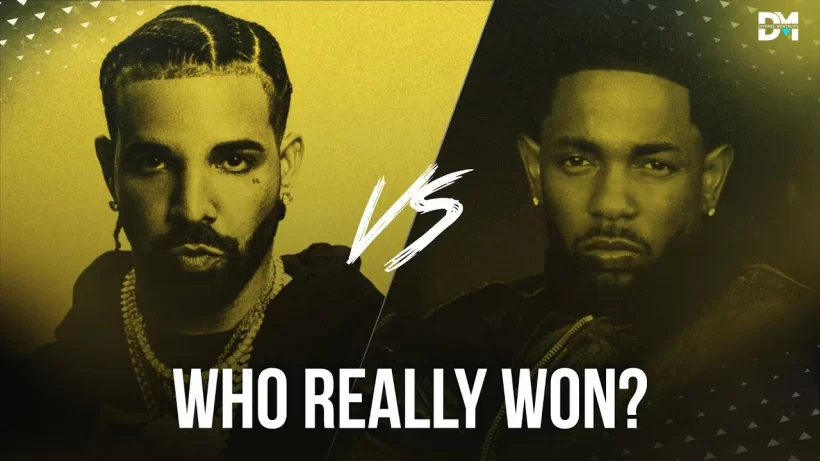
[…] everything about Drake and Kendrick Lamar timeline […]
[…] If you want to know more about it, check out our article Drake vs Kendrick Timeline (2009–2025): The Definitive Guide. […]
[…] that followed—The Bridge Wars, Nas vs. Jay-Z, 50 Cent vs. Ja Rule and recent clash involving Drake and Kendrick—follows the blueprint laid out by a 14-year-old Lolita […]
[…] The end of the “Party Era”: before this, rap was largely about parties and fun (think Sugarhill Gang). The Bridge Wars proved that aggression and factual history were potent tools. This energy eventually evolved into the “Answer Records” culture we see in modern feuds like Drake vs Kendrick […]
[…] If you want to learn more about Drake’s lawsuit against UMG, read our article Drake Suing UMG: What Really Happened.And if you want to know why Drake filed the lawsuit against UMG, check out our article Drake vs Kendrick Timeline (2009–2025): The Definitive Guide. […]
[…] Eazy-E effectively stripped away Dre’s tough-guy image in front of the whole world, establishing a blueprint for character assassination that we still see today in the Drake vs Kendrick timeline. […]