When history looks back at the formation of the “World’s Most Dangerous Group,” it often focuses on the cultural impact. But to understand the true nature of the beast, one must look at the balance sheet. The origin of N.W.A was not just a musical collaboration; it was a high-risk Venture Capital investment fueled by the streets.
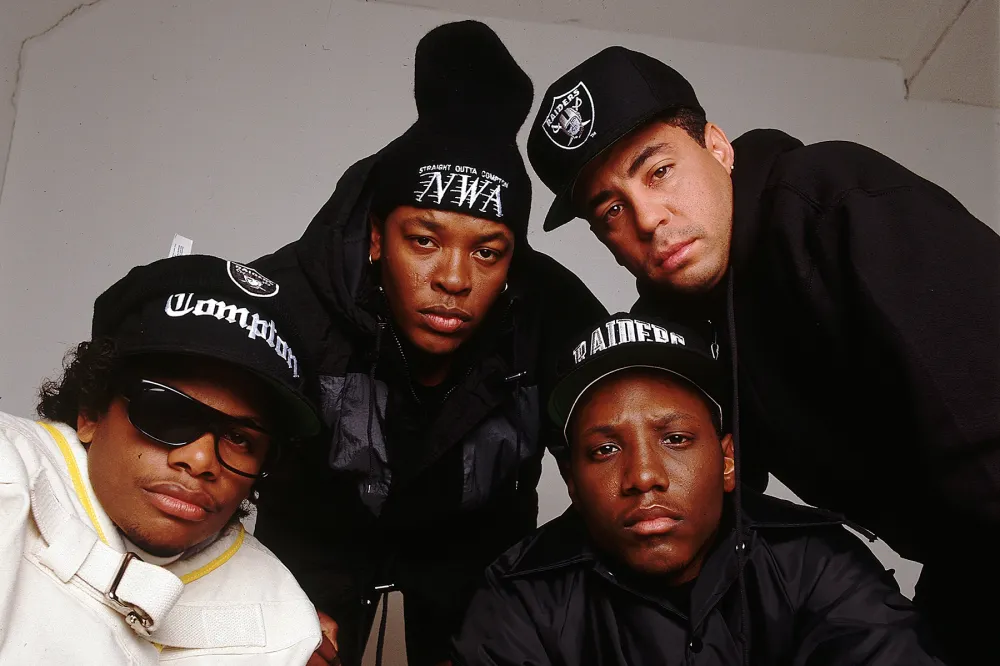
The $250,000 Startup
Before the FBI letters and the platinum plaques, there was a simple calculation of risk versus reward. Eric Wright (Eazy-E) was not looking to be a rapper; he was looking to be a CEO. The transition from “Dope Man” to music executive was a calculated pivot.
The original members of N.W.A. were not initially assembled as a band, but as assets in a startup financed by illicit capital. The goal was simple: launder the danger of Compton into a legitimate business structure where the return on investment (ROI) didn’t carry a prison sentence.
The Capital: “Drug Money” as the Seed Investment
Unlike Motown or Def Jam, Ruthless Records did not start with a bank loan or a corporate grant. It started with what forensic accountants would call “street capital.”
Ruthless Records Co-Founder: The Investor
Eric Wright, a 10th-grade dropout from Compton High School who later earned his GED, saw the street life not as a career, but as a means to an end. The label of “drug dealer” became a kind of armor for him on the streets, but the profits were his seed money. It is estimated that Eazy-E invested approximately $250,000 of his own earnings generated from dealing substances to launch the label.
This startup capital allowed Ruthless Records to operate without the oversight of major labels initially, giving Eazy-E total control. He was the sole financier, which meant he was the sole owner—a distinction that would later define the contractual issues that led to the fall of N.W.A..
The Macola Records Era: The $500 Distribution Deal
Before the glitz of huge offices, Ruthless operated out of a garage and relied on a lean distribution model. Eazy-E partnered with Macola Records, a Hollywood-based pressing plant that served as the engine for independent West Coast rap.
The Economics of Independence
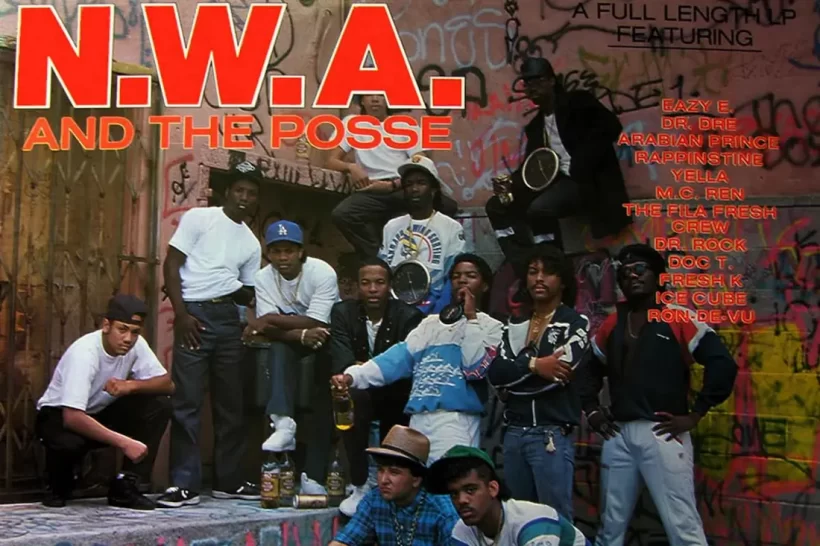
The business model was incredibly efficient. At Macola, it cost Eazy-E only $500 to press 1,000 records. This low barrier to entry allowed Ruthless to test the market with minimal overhead. The early releases, often categorized under the N.W.A. and The Posse album era (a compilation released by Macola to capitalize on the group’s later success), were distributed through this independent channel, ensuring the masters remained with Wright.
Arabian Prince NWA: The Electro-Funk Architect
Crucial to this early era was Arabian Prince (Mik Lezan). Often omitted from the Hollywood retelling, Arabian Prince was a founding member who brought a “techno-funk” and dance sound to the group before the “Gangsta Rap” identity fully took over. He was a key figure in the Macola sessions, producing tracks like “Supersonic.” His eventual departure was, like Ice Cube’s, rooted in the ledger: he realized he wasn’t being paid correctly for the hits he produced.
The Forgotten Architect: Krazy D & The “Underworld”
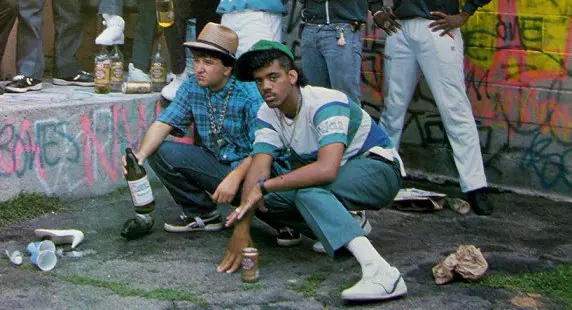
A forensic analysis of the early Ruthless days reveals a member often erased from the narrative: Damon Trujillo, known as Krazy D.
Krazy D: The Mexican Connection
Krazy D was a Mexican-American rapper and close affiliate who played a pivotal role in the label’s infancy. He was introduced to Eazy-E through DJ Maestro (Dr. Dre’s uncle) and helped write the track “Panic Zone,” which was originally titled “Hispanic Zone.”
Krazy D’s influence goes beyond just lyrics; he offers a glimpse into the group’s identity crisis before they settled on N.W.A. According to Krazy D, one of the original names considered for the supergroup was “Underworld.” His presence on the cover of the N.W.A. and the Posse compilation remains the visual proof of an era where the lineup was fluid and experimental.

The Pivot: Boyz-n-the-Hood & The Heller Connection
The transition from a local electro-rap act to a national phenomenon hinged on a single song and a strategic partnership.
Eazy-E and Boyz n the Hood: The Asset that Changed Everything
Ice Cube (O’Shea Jackson) originally wrote “Boyz-n-the-Hood” for a group called H.B.O., who were signed to Ruthless. However, H.B.O. rejected the track, claiming, “We don’t do that [ __ ].” It was Dr. Dre (Andre Young) who convinced Eazy-E to rap the lyrics himself. The track became the proof of concept for the Ruthless brand.
The Cost of Doing Business
To take this local buzz global, Eazy needed an entry into the legitimate industry. He was introduced to veteran manager Jerry Heller by Alonzo Williams. The price of this introduction? A mere $750 fee paid to Williams.
This meeting bridged the gap between Compton and the corporate world. When it came time to produce the album that would shake America, Straight Outta Compton, the efficiency of their operation was staggering. The entire album was produced for approximately $12,000.
How Much Did Jerry Heller Steal from Eazy-E?
While this question haunts the later years of Ruthless, the initial partnership was undeniably profitable. Heller turned that $12,000 production cost into millions in revenue. However, the seeds of destruction were sown early: the structure that made Eazy the sole owner and Heller the “business associate” left the creative forces—Ice Cube, Dre, and Arabian Prince—feeling like underpaid employees in an empire they helped build.
Conclusion: The ROI of Ruthless Records
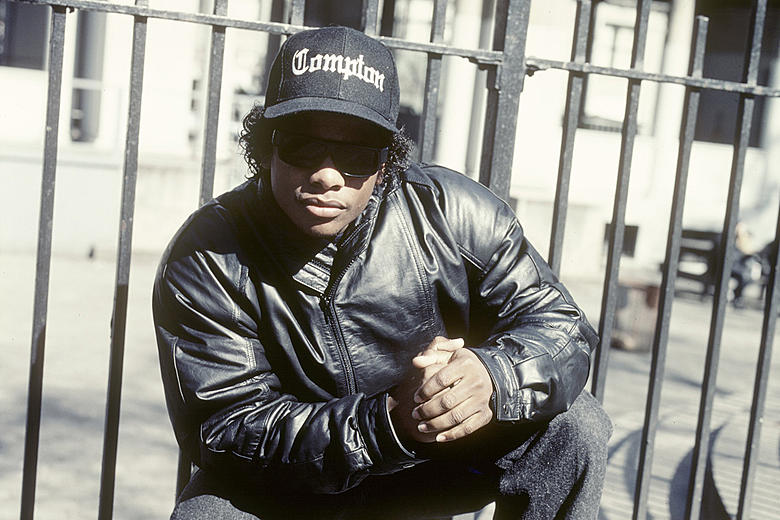
The story of N.W.A’s origin is a masterclass in ROI. Eazy-E turned $250,000 of high-risk street money and $500 pressing costs into the most dangerous and profitable independent label in America.
By owning the masters from day one—thanks to the Macola model and his initial capital—Eazy-E proved a maxim that remains true in the music business today: “The owner of the master is the master of the game.” The legacy of Ruthless Records is not just the music; it is the blueprint of how to turn illegitimate cash into a legitimate dynasty.
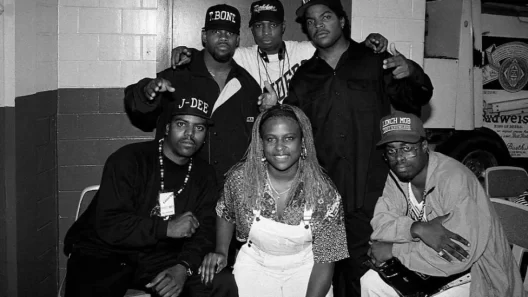
[…] truly understand the collapse of the group, one must look back at the genesis of N.W.A and its ruthless startup capital, which laid a fragile foundation.The story of N.W.A is often told through the lens of Hollywood, […]